Quick answer: A meaningful Palestinian gift is more than an object with a cultural design. It connects the recipient with a Palestinian maker, writer, craft, food tradition, or family story. To choose thoughtfully, consider the recipient’s interests, investigate the item’s origin, understand how it was made, and look for clear evidence of who benefits from the purchase.
1. Start With the Person, Not the Product
The best gift begins with a simple question: what would make this particular person feel understood?
Someone who loves reading may appreciate a Palestinian memoir, a collection of poetry, or a book about food and family history. A person who enjoys making things might connect with tatreez (تطريز), Palestinian embroidery, or a carefully selected set of stitching materials. For someone who enjoys cooking or hosting, a food-related gift may feel more natural than a decorative object.
There is no single gift that represents every Palestinian experience. Palestinian heritage includes different towns, villages, regions, generations, and diaspora communities. A thoughtful choice makes room for that diversity instead of reducing it to one pattern, color, or symbol.
Before buying, consider three things:
- Interest: What does the recipient already enjoy reading, making, cooking, collecting, or learning?
- Use: Will the gift be read, worn, displayed, shared at a table, or kept as a personal keepsake?
- Connection: Is there a particular story, place, family memory, or cultural tradition that makes the gift relevant to this person?
A useful gift can be deeply meaningful. It does not have to be expensive, rare, or presented as an heirloom.
2. Choose a Gift Category That Tells the Right Story
Palestinian Tatreez and Embroidered Textiles
Tatreez is a living textile tradition with regional histories and changing forms. An embroidered item may be a small accessory, a framed textile, a practical object, or a piece intended to be kept for years.
When choosing embroidery, look beyond the pattern printed on the product page.
Ask whether the work is hand-stitched or machine-produced, what material was used, and who made it. If a seller describes a piece as vintage or identifies a specific region, ask what evidence supports that description.
Be cautious about assigning one fixed meaning to every motif. Patterns and their interpretations can vary by place, period, maker, and context. A seller’s explanation can be useful, but it should not automatically be treated as established historical fact.
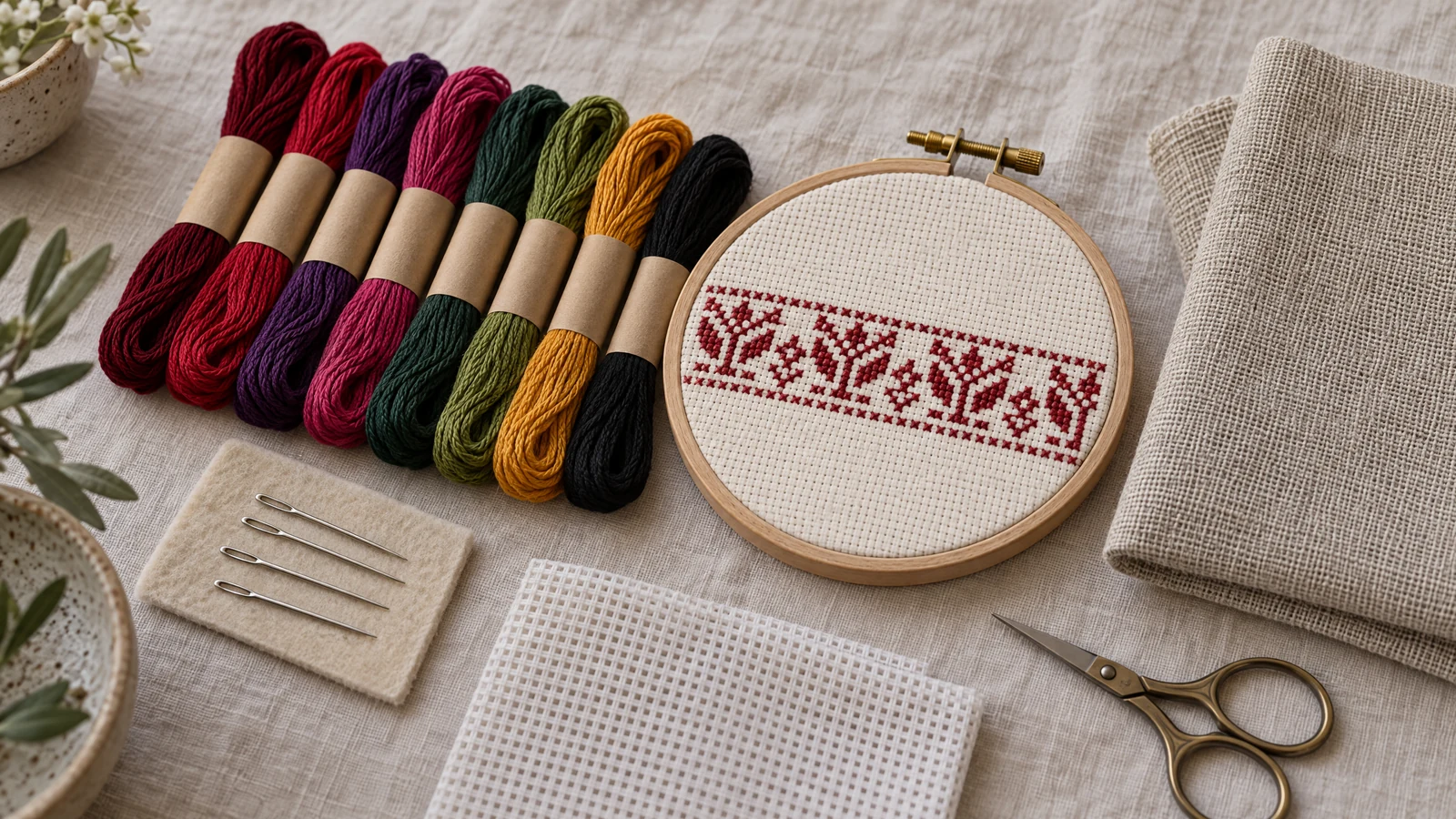
For a beginner who wants to learn the craft rather than simply own a finished object, a modest set of suitable materials may be a better fit than an expensive textile.
Explore next: Mindful Tatreez Starter Supplies Guide and The Beginner’s Comprehensive Guide to Tatreez.
Palestinian Books: Stories, Memory, and Everyday Life
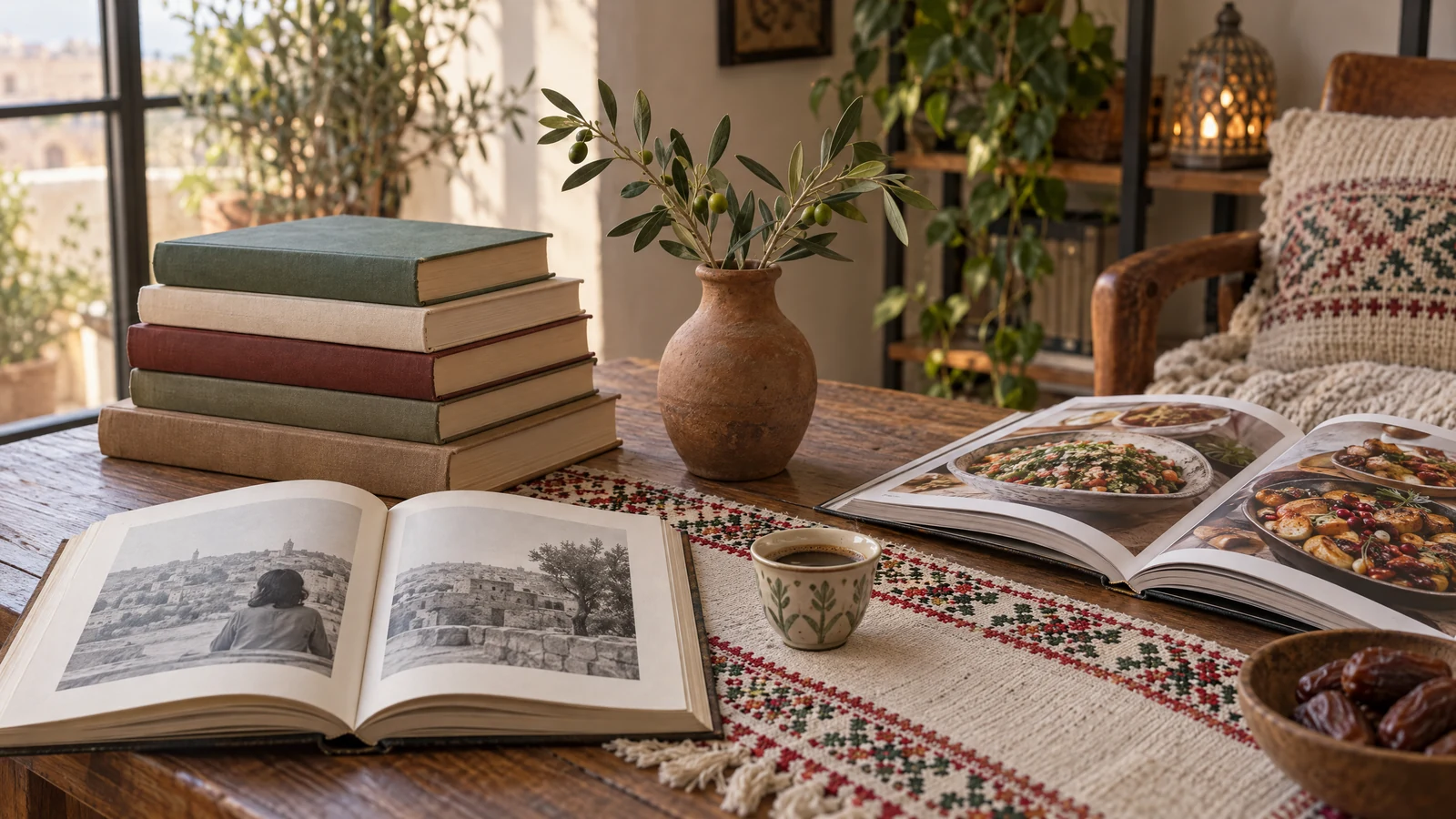
A book can introduce a reader to Palestinian literature, history, poetry, food, landscape, or personal experience. It can also invite a conversation that continues long after the gift has been opened.
Choose according to the recipient:
- For a reader interested in personal stories: Consider a memoir that explores home, displacement, memory, or return.
- For someone who loves cooking: Look for a Palestinian cookbook that explains recipes alongside the people and traditions connected to them.
- For a poetry reader: A collection by a Palestinian poet may be a more personal choice than a general cultural overview.
- For a textile enthusiast: A well-documented reference book can provide historical and visual context for Palestinian dress and embroidery.
Think about language and reading level, too. A beautifully chosen book is most useful when the recipient can comfortably read it and genuinely wants to explore its subject.
Explore next: Essential Palestinian Books for Every Home.
Olive Wood, Ceramics, and Other Handmade Objects
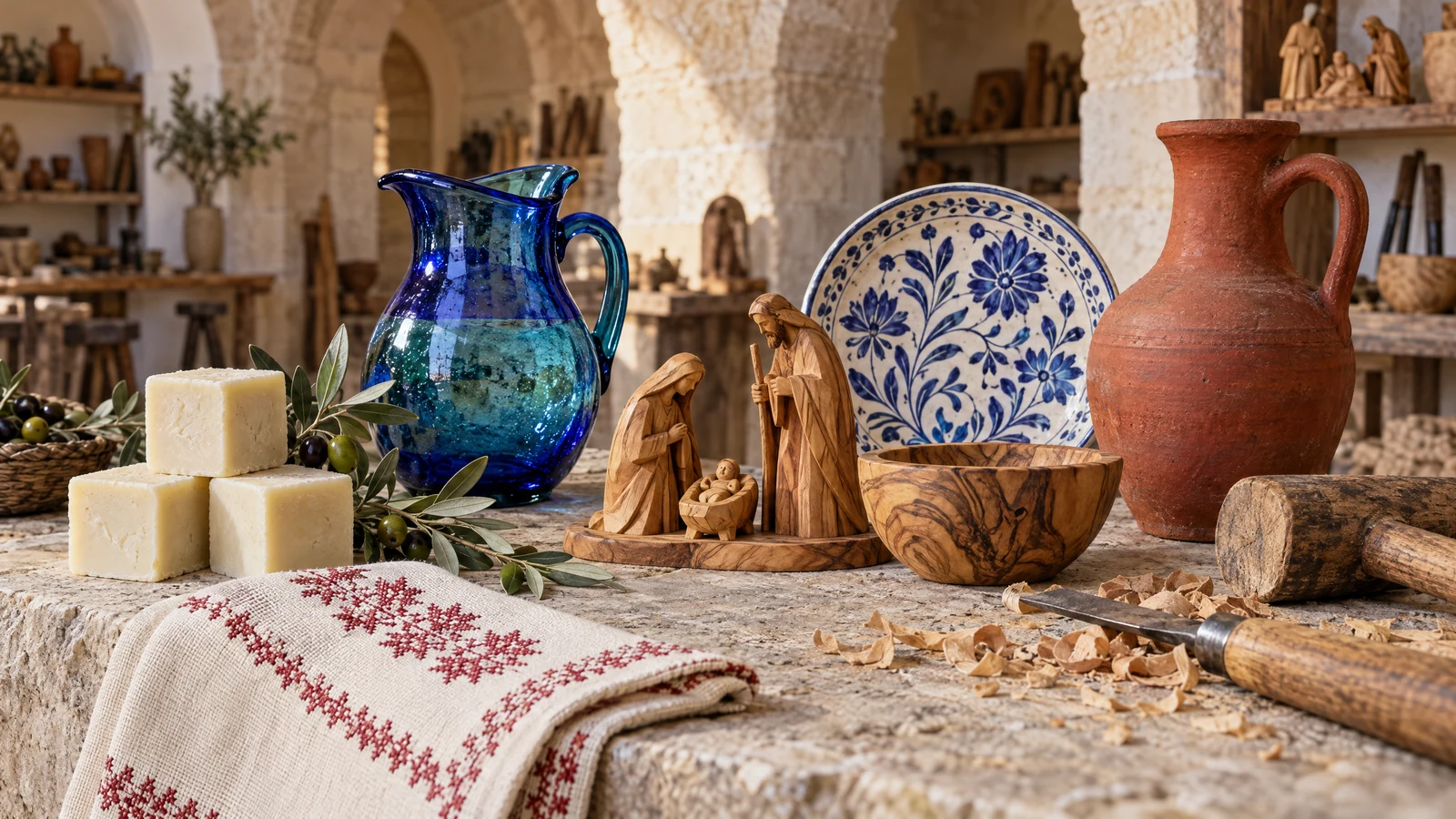
A practical object can become part of someone’s daily life. A wooden serving utensil, a ceramic vessel, a glass object, or a small decorative piece may be a good choice for someone who values materials and craftsmanship.
But the appearance of a craft does not establish where it was made. When a seller attributes an item to Bethlehem, Hebron, or another Palestinian location, look for an explanation of the workshop, maker, or production process.
Consider how the recipient will use the object. A serving board needs different qualities from a fragile decorative piece. A handmade item may also vary slightly in color, dimensions, or finish; these differences should be explained honestly rather than automatically presented as proof of authenticity.
For a gift intended to last, ask about materials, care instructions, and packaging. If the item is fragile or will travel internationally, check how it can be transported safely.
Food and Pantry Gifts
Food offers another way to connect a gift with everyday Palestinian traditions. Olive oil, za’atar, sumac, and other pantry ingredients can be thoughtful choices for someone who enjoys cooking, sharing meals, or discovering regional cuisines.
For edible gifts, check the product label and seller information carefully. Useful details include the producer, place of origin, ingredients, harvest or production information where applicable, packaging date, and storage instructions.
Do not assume that every product labelled Palestinian has the same provenance or that all Palestinian food traditions are identical. Regional and household practices vary.
If the gift is intended for someone with dietary restrictions, allergies, or limited storage space, practical details matter as much as presentation.
Explore next: The Palestinian Pantry Guide and The Palestinian Olive Harvest.
3. How to Check Authenticity and Provenance
The word authentic is useful only when it can be explained.
A Palestinian-inspired design, a handmade product, and an item made by a Palestinian artisan are not necessarily the same thing. A responsible seller should make clear which description applies.
Before purchasing, look for answers to these questions:
- Who made it? Is the artisan, workshop, publisher, or producer named?
- Where was it made? Does the listing identify a specific production location when that information is known?
- What is it made from? Are the materials clearly described?
- How was it produced? Does the seller distinguish handwork from machine production or printed designs?
- What supports the claim? Is there a workshop profile, cooperative record, product documentation, or other credible evidence?
- Who benefits from the sale? Can the seller explain the relationship between the purchase and the maker or producing community?
Not every small maker will have formal documentation for every detail. The important distinction is between a transparent account of what is known and unsupported claims presented as certainty.
Be cautious when a listing uses words such as ancient, rare, museum-quality, fair trade, or authentic vintage without explaining what they mean or how the claims can be checked.
A cultural design alone is not proof of origin. Nor should a product be described as directly supporting a particular artisan or community unless the seller can substantiate that relationship.
4. What Does Ethical Purchasing Look Like?
A thoughtful purchase considers not only the item but also the people involved in making and selling it.
Where possible, look for direct information about an artisan, a documented cooperative, or a transparent producer. If a seller claims to follow a recognized fair-trade standard, check which organization or certification is involved rather than relying on the phrase alone.
Consider these practical signals:
- The maker or producing organization is clearly identified.
- The product description explains the production location and materials.
- Claims about fair compensation or community support are specific and verifiable.
- Product photographs represent the item being sold rather than an unrelated illustrative image.
- The seller provides clear information about delivery, returns, and care.
Ethical purchasing is not a guarantee that every aspect of a supply chain is visible. It is a reason to ask better questions and prefer sellers who answer them clearly.
Avoid assuming that a high price proves fair compensation, or that a low price automatically means exploitation. Price alone cannot tell the full story.
5. Match the Gift to the Occasion
The occasion can help narrow the choices without dictating them.
| Occasion | Gift ideas to consider | What to check |
|---|---|---|
| A birthday | A book, embroidered accessory, or useful handmade object | The recipient’s interests and preferred style |
| A housewarming | Olive wood kitchenware, ceramics, or pantry ingredients | Practical use, food preferences, and care |
| A wedding | A carefully sourced textile, a book collection, or a lasting home object | Quality, durability, and the couple’s tastes |
| A gift for a child | An age-appropriate book, creative activity, or introductory cultural resource | Age suitability, language, and materials |
| A gift for a reader | Palestinian poetry, memoir, food writing, or cultural history | Reading level, language, and subject |
| A gift for someone learning tatreez | A suitable starter kit or an introductory guide | Materials, instructions, and the learner’s experience |
These are starting points, not rules. A small, useful gift chosen with care may be more personal than an expensive object chosen simply because it looks traditional.
6. Common Mistakes to Avoid
Choosing a design without checking its origin
A motif may be inspired by Palestinian embroidery without being hand-stitched or made in Palestine. Read the description and ask questions when the distinction matters.
Treating all Palestinian crafts as interchangeable
Different crafts have different materials, techniques, histories, and places of production. A good gift guide should explain those differences rather than flatten them into a single aesthetic.
Assuming every symbol has one historical meaning
Motif interpretations can differ by context and source. Prefer documented explanations and distinguish historical evidence from contemporary interpretation.
Buying a book without considering the reader
A specialist historical study may be ideal for a researcher but less suitable for someone looking for an accessible introduction. Match the book to the person.
Relying on emotional marketing alone
A moving description does not establish provenance, quality, or fair compensation. Look for concrete information alongside the story.
Forgetting practical details
Delivery time, customs restrictions, packaging, care instructions, food labelling, and the recipient’s preferences can determine whether a gift is genuinely useful.
7. A Simple Checklist Before You Buy
Before choosing a Palestinian cultural gift, take a moment to check:
- It fits the recipient’s interests and the occasion.
- The product description identifies the materials and intended use.
- Claims about the maker and production location are clear.
- Handmade, machine-produced, and printed items are accurately distinguished.
- Historical or cultural claims are explained with appropriate evidence.
- Any fair-trade or community-support claim can be substantiated.
- The item can be delivered, used, stored, or cared for appropriately.
- The seller’s photographs and description accurately represent the item.
You do not need perfect documentation for every small purchase. You do need enough information to understand what you are buying and to avoid claims that the seller cannot support.
A Gift That Carries Its Story
A Palestinian cultural gift does not need to be rare or elaborate to matter. A book can open a new perspective. An embroidered object can invite someone to learn about a living textile tradition. A food gift can become part of a shared meal. A well-made object can be used and appreciated for years.
The most thoughtful choice is one whose story can be told honestly: what it is, where it comes from, who made it, and why it suits the person receiving it.
At Gazagifts, exploring Palestinian heritage begins with curiosity and care. Continue with our guides to Palestinian books, tatreez supplies, and living Palestinian craft traditions.