Quick answer: To start with Palestinian literature, read Mourid Barghouti’s memoir I Saw Ramallah for lyrical personal narrative, or Reem Kassis’s The Palestinian Table for food and family history. For embroidery, Shelagh Weir’s Palestinian Costume is a major reference.
1. Literature as a Living Archive
In Palestinian culture, the written word has often served as a refuge for memory, geography, and human dignity. When villages were depopulated and archives dispersed, Palestinian authors, poets, and ethnographers took up their pens to record the names of wild plants, the architecture of stone terraces, the rhythm of harvests, and the interior lives of their people.
Whether you are building your own home library or seeking a profound cultural gift for a loved one, these books offer depth and lasting resonance.
2. Essential Memoirs & Landscapes
2.1 I Saw Ramallah by Mourid Barghouti
- Genre: Memoir / Poetic Prose
- Why It Matters: Winner of the prestigious Naguib Mahfouz Medal for Literature, Barghouti’s memoir recounts his return to his hometown of Ramallah after thirty years of exile. With lucid, devastating elegance, he explores the dislocation of exile and the bittersweet reality of returning to a landscape transformed by time.
- Best For: Readers who appreciate lyrical, philosophical storytelling about identity and belonging.
2.2 Palestinian Walks: Notes on a Vanishing Landscape by Raja Shehadeh
- Genre: Nature Writing / Political Memoir
- Why It Matters: Winner of the Orwell Prize, this book follows Palestinian lawyer and writer Raja Shehadeh as he takes six long walks over three decades across the wild limestone hills of Ramallah and Jerusalem. Shehadeh weaves botanical knowledge of wild thyme and cyclamen with legal documentation of land loss.
- Best For: Lovers of nature writing, walking literature, and environmental history.
2.3 In Search of Fatima: A Palestinian Story by Ghada Karmi
- Genre: Memoir / Social History
- Why It Matters: Karmi chronicles her idyllic childhood in the leafy Jerusalem neighborhood of Qatamon prior to 1948, followed by her family’s relocation and upbringing in 1950s London. It provides an intimate examination of diaspora adaptation, nostalgia, and the struggle to retain roots in a foreign land.
- Best For: Readers interested in diaspora identity and mid-20th century Levant social history.
3. Culinary Culture & Kitchen Heritage
3.1 The Palestinian Table by Reem Kassis (Phaidon)
- Genre: Culinary Monograph / Family History
- Why It Matters: Family recipes organised around home life and regional nuance, from the olive groves of the Galilee to Jerusalem home cooking and diaspora adaptations, with the context behind each dish.
- Best For: Home cooks who want family recipes with their stories.
3.2 The Gaza Kitchen: A Palestinian Culinary Journey by Laila El-Haddad & Maggie Schmitt
- Genre: Culinary Anthropology / Investigative Cookbook
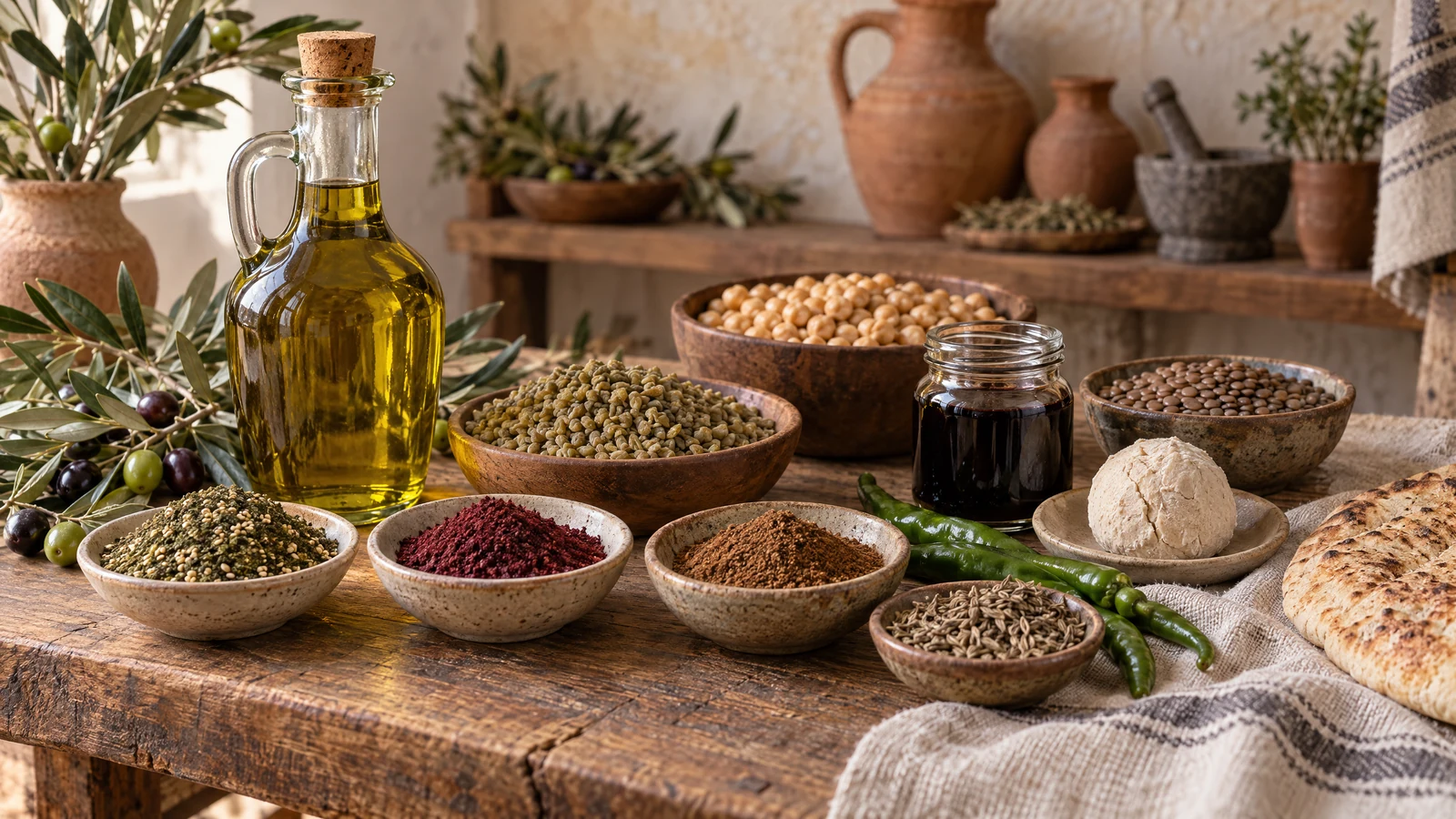
- Why It Matters: El-Haddad and Schmitt document the distinctive culinary identity of the Gaza Strip—its unique reliance on crushed dill seeds (ein jaradeh), green chilies, clay pots (badiyeh), and Mediterranean seafood—through interviews in family kitchens and photography.
- Best For: Food lovers who want to explore regional Levant micro-cuisines and the politics of food sovereignty.
4. Textile Arts & Cultural Heritage Reference
4.1 Palestinian Costume by Shelagh Weir (British Museum Press)
- Genre: Ethnographic Monograph / Textile History
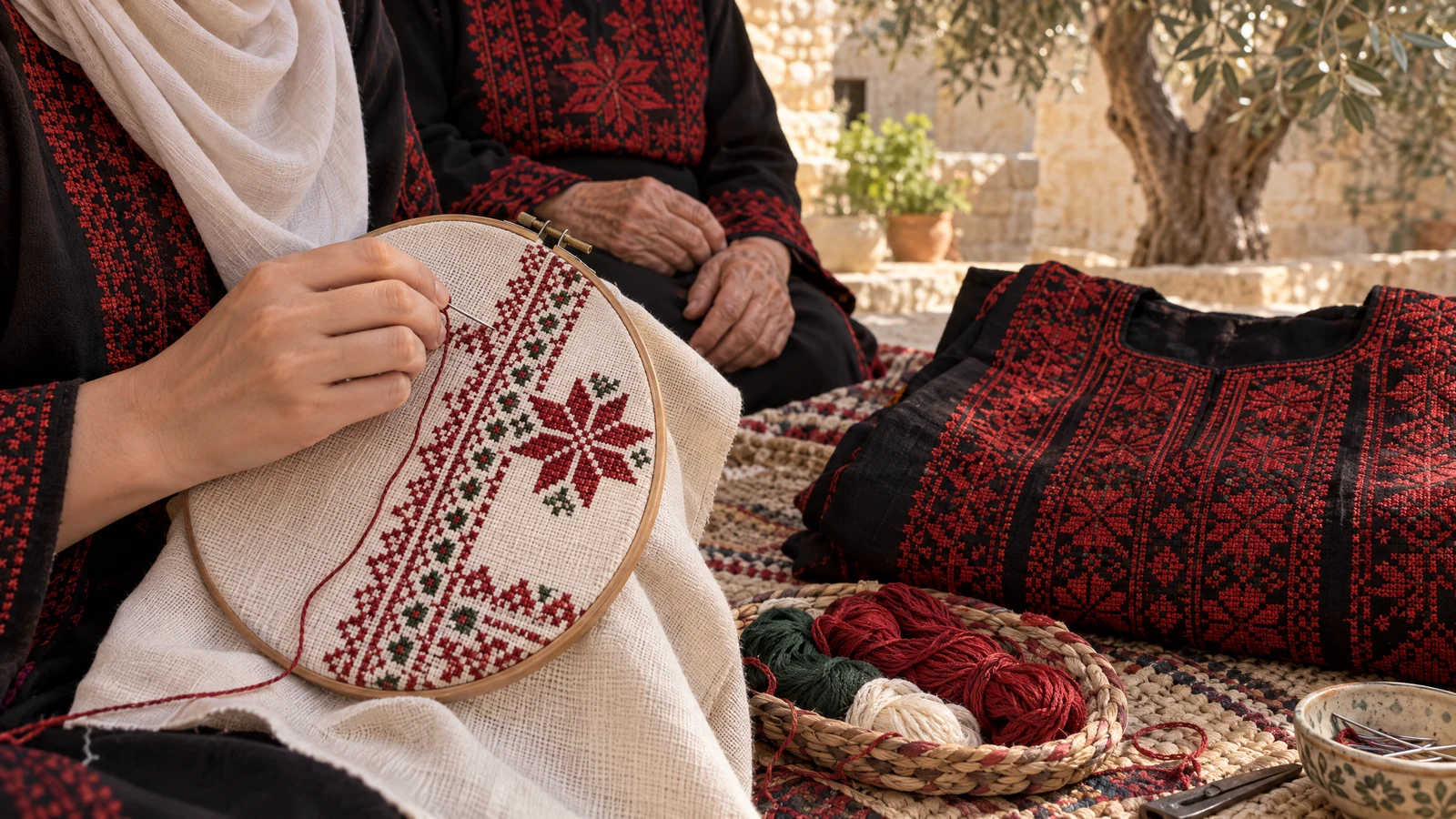
- Why It Matters: A major reference on historical Palestinian dress and embroidery. Drawing on decades of fieldwork and the British Museum’s extensive textile holdings, Weir details regional garment anatomy, weave varieties, local vegetable dyes, and the sociopolitical meaning of costume.
- Best For: Textile artists, historians, and serious students of tatreez.
4.2 Embroidering Identities: A Century of Palestinian Clothing by Tania Tamari Nasir & Iman Saca
- Genre: Museum Exhibition Catalog / Cultural Study
- Why It Matters: Published by the Oriental Institute Museum of the University of Chicago, this book traces the evolution of Palestinian embroidery from late Ottoman village thobes through British Mandate changes to post-1948 diaspora adaptations.
- Best For: Readers seeking visual documentation of chest panels (qabbeh) and regional motif evolution.
5. Poetry & Foundational Fiction
- Mahmoud Darwish — The Butterfly’s Burden (translated by Fady Joudah): A luminous bilingual collection showcasing Palestine’s national poet at the height of his lyrical power.
- Ghassan Kanafani — Men in the Sun and Other Palestinian Stories: One of the most influential novellas of modern Arabic literature, chronicling three Palestinian refugees striving for survival across the desert.
What to Read Next
- Explore curated artisan gifts: Thoughtful Palestinian Gifts Guide.
- Start your embroidery journey: The Beginner’s Comprehensive Guide to Tatreez.
- Discover traditional pantry staples: The Palestinian Pantry Guide.
- Cook from Gaza’s kitchen: Gazan Dagga Salad Recipe.