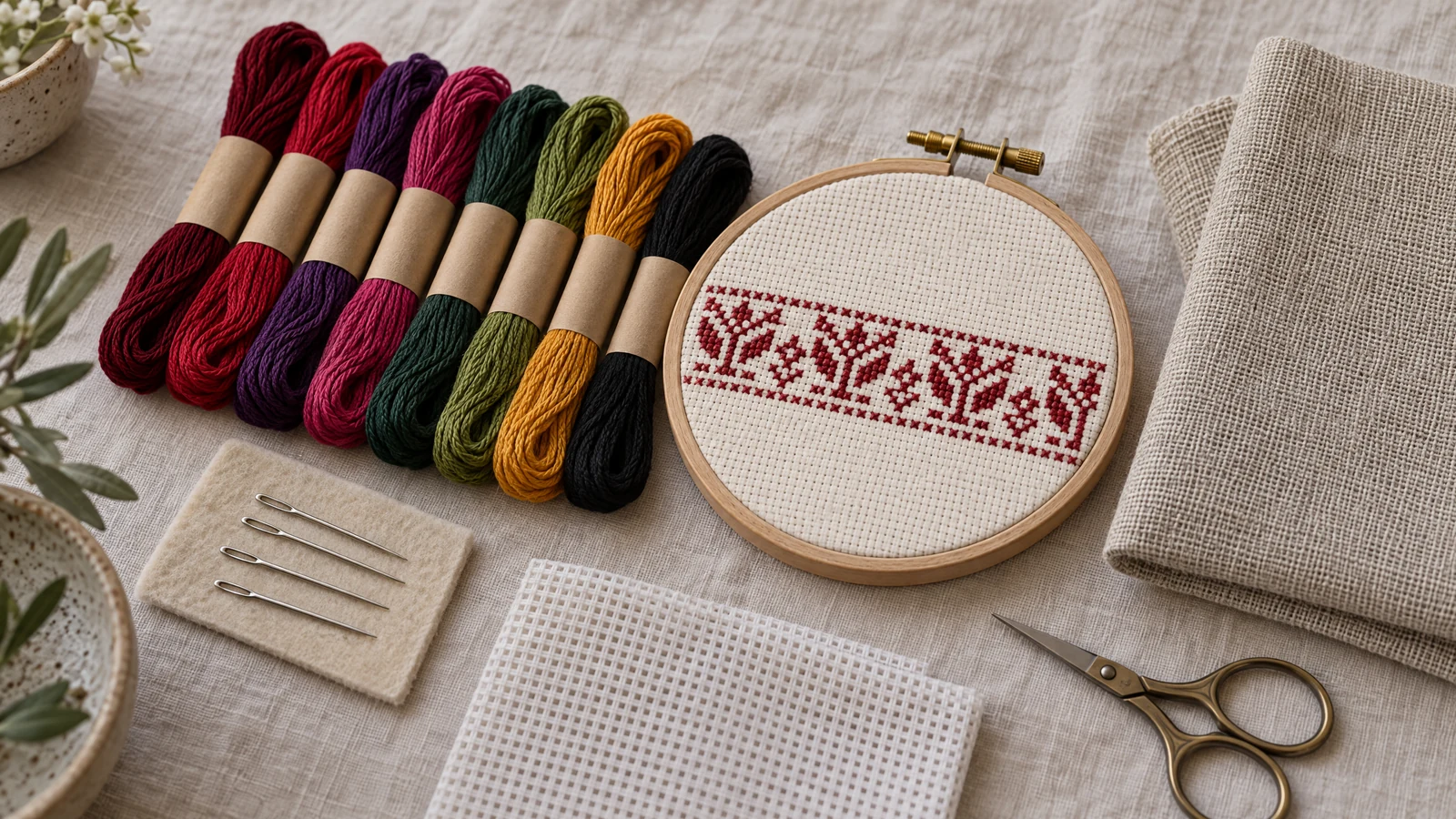
Quick answer: To begin tatreez you need DMC Pearl Cotton No. 8 thread, blunt tapestry needles (size 24 for 14-count fabric, size 26 for finer fabric), 14-count Aida cloth or evenweave linen, a wooden hoop, and fine-point snips. Waste canvas is the extra you need to stitch onto clothing.
1. Crafting with Intention
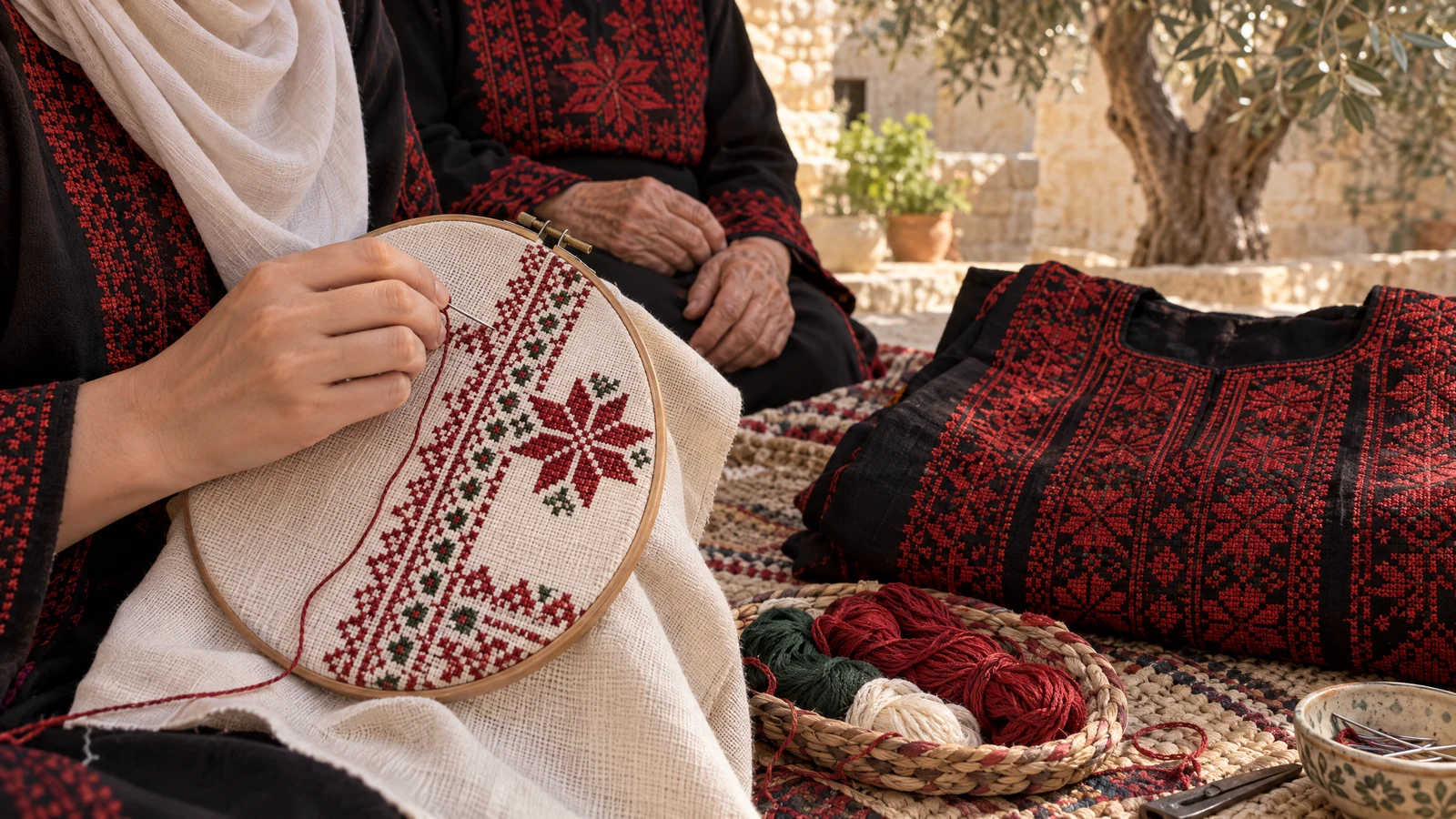
Starting Palestinian embroidery (tatreez) is an act of tactile slowing down. Because tatreez is a counted-thread discipline, having the correct tools makes the difference between frustrating thread snags and rhythmic, meditative stitching.
You do not need an overwhelming hoard of supplies to begin. A curated, high-quality starter kit of five thoughtful tools will carry you through your first dozen motifs and samplers.
Below is a practical guide to thread, needle sizes, fabric and sourcing.
2. The Thread: Why Pearl Cotton No. 8?
While general Western cross-stitch often uses 6-strand divisible embroidery floss, many modern tatreez stitchers choose DMC Pearl Cotton No. 8 (Coton Perlé).
Why Pearl Cotton No. 8?
- Pre-Twisted Structure: Pearl cotton is a non-divisible, two-ply twisted thread with a silky mercerized sheen. You do not separate strands; you simply cut a 16-to-18-inch length and thread your needle directly.
- Full, Raised Coverage: On 14-count fabric, Pearl Cotton No. 8 fills the grid square completely, creating the dense, textured, rope-like crosses characteristic of antique village thobes.
- Snag Resistance: Because the fibers are tightly twisted, they resist fraying and fuzzing against fabric edges.
Suggested Colours (DMC Numbers)
If you want a palette close to colours found in Palestinian dresses, these DMC Pearl Cotton No. 8 shades are a starting point. They are suggestions, not a single authentic palette: colours varied by region and period. See Regional Motifs in Palestinian Embroidery for how they differed.
- Palestinian Reds & Burgundies: DMC 815 (Deep Garnet/Wine), DMC 816 (Rich Crimson), DMC 321 (Vibrant Village Red).
- Coastal & Gaza Jewels: DMC 550 (Royal Violet), DMC 915 (Magenta/Dark Fuchsia), DMC 796 (Deep Mediterranean Blue).
- Olive Hill Greens: DMC 890 (Forest Pine), DMC 701 (Spring Olive Green).
- Warm Earth Accents: DMC 742 (Marigold/Tangerine), DMC 3820 (Harvest Gold), DMC 310 (Black).
3. The Needles: Why Blunt Tapestry Needles are Crucial
Never use sharp hand-sewing or crewel needles for tatreez on counted fabric.
Recommended Needle Sizes:
- Size 24 Blunt Tapestry Needle: Ideal for 14-count Aida cloth and DMC Pearl Cotton No. 8. The elongated eye accommodates the thicker twisted thread easily, while the blunt point protects fabric threads.
- Size 26 Blunt Tapestry Needle: Perfect for finer 18-count fabric or 28-count evenweave linen.
Examples of well-known brands: John James (England) or Bohin (France) nickel-plated tapestry needles have polished eyes that do not shred thread. These are examples, not sponsored or affiliate recommendations.
4. The Fabric: Choosing Your Canvas
4.1 14-Count Zweigart Aida (Best for Beginners)
- Characteristics: 100% cotton with distinct, square-woven holes.
- Best Colors: “Natural Flax”, “Antique White”, or “Soft Oatmeal”. Pure optical white can look stark; warm neutrals replicate historic handwoven unbleached linen.
- Why Zweigart? German-milled Zweigart fabric is woven to exact mathematical square ratios (equal threads per inch horizontally and vertically), ensuring your motifs do not become stretched or squashed.
4.2 28-Count Evenweave Linen (Cashel Linen)
Once you have stitched two or three small samplers, graduating to natural evenweave linen (stitched “over two” threads, yielding 14 stitches per inch) gives your work the tactile, heirloom quality of antique museum textiles.
4.3 14-Count Waste Canvas
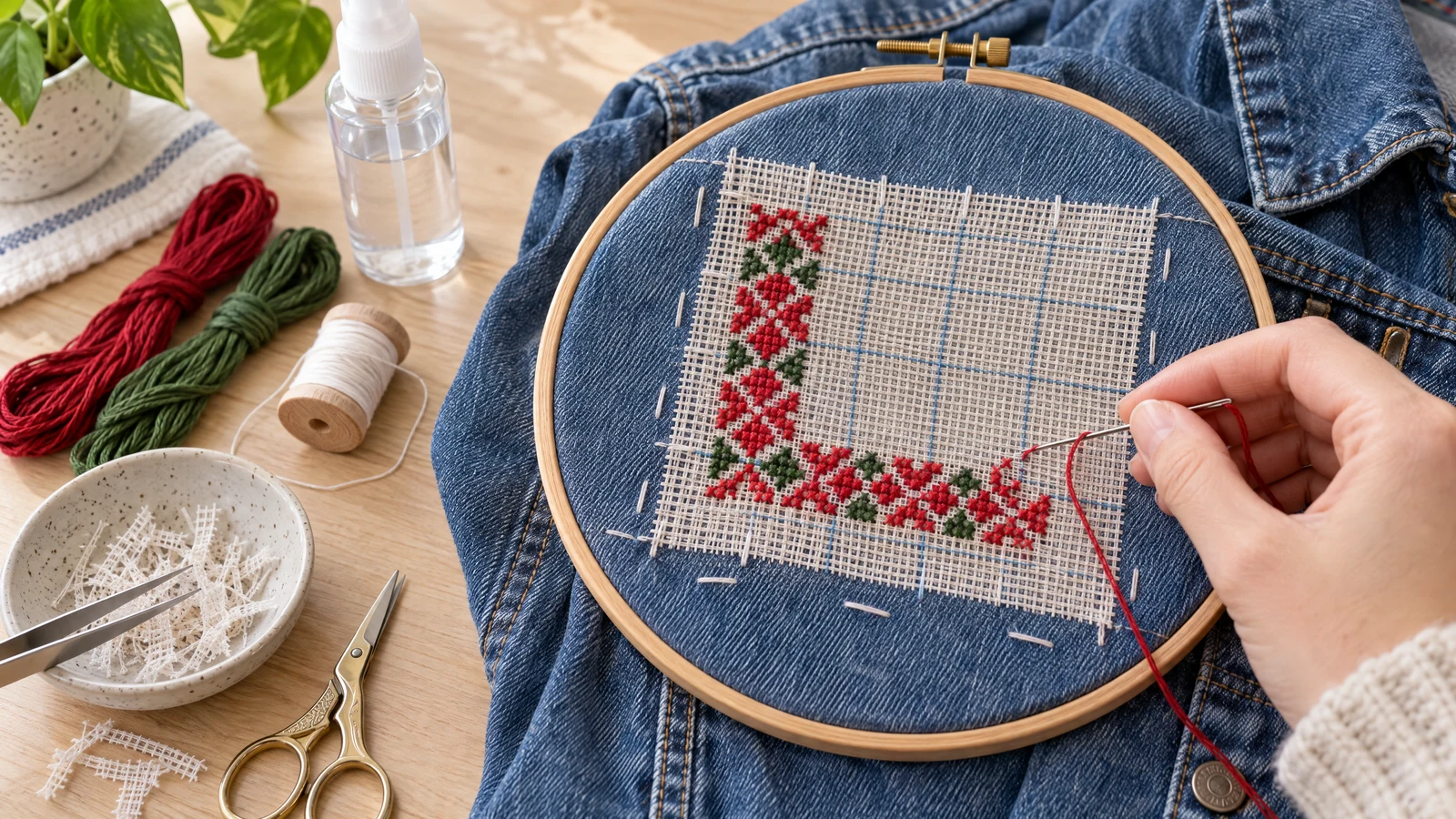
To stitch motifs onto denim jackets, linen shirts, or tote bags, pick up waste canvas: a temporary grid that you baste onto the garment, stitch through, and then pull out thread by thread. The Waste Canvas Tutorial explains the full method.
5. Helpful Notions
- Wood Embroidery Hoop (6 or 7-inch): Look for solid beechwood hoops with brass tightening screws (e.g., Hardwick & Cesko or Elbesee). Plastic hoops often slip and lose tension.
- Stork or Micro-Tip Snips: Sharp, fine-point scissors designed for precision thread snipping close to the fabric.
- Water-Soluble Fabric Pen: For lightly drawing central axis guidelines before stitching.
6. Where to Buy Your Kit
Support independent, ethical businesses when building your kit:
- Independent Local Haberdashers: Support local needlework shops in your city where knowledgeable staff can help you select genuine DMC threads and Zweigart fabrics.
- Palestinian Cultural Centers & Cooperatives: Non-profit organisations such as Sunbula (Jerusalem) sometimes offer embroidery kits; check their website for what is currently available and how purchases support the makers.
Key terms
- Tatreez (تطريز): Palestinian counted-thread embroidery.
- Pearl cotton No. 8 (coton perlé): a non-divisible, twisted mercerized cotton thread.
- Tapestry needle: a blunt-tipped needle that slides between fabric threads without splitting them.
- Aida: a cotton fabric with square-woven holes that make counting easy.
- Evenweave: fabric with equal threads per inch in both directions, such as linen.
- Waste canvas: a temporary grid that you stitch through and then pull out.
What to Read Next
- Master step-by-step stitch mechanics: The Beginner’s Comprehensive Guide to Tatreez.
- Apply your embroidery to clothing: The Waste Canvas Method Tutorial.
- Explore meaningful Palestinian heirlooms: Thoughtful Palestinian Gifts Guide.