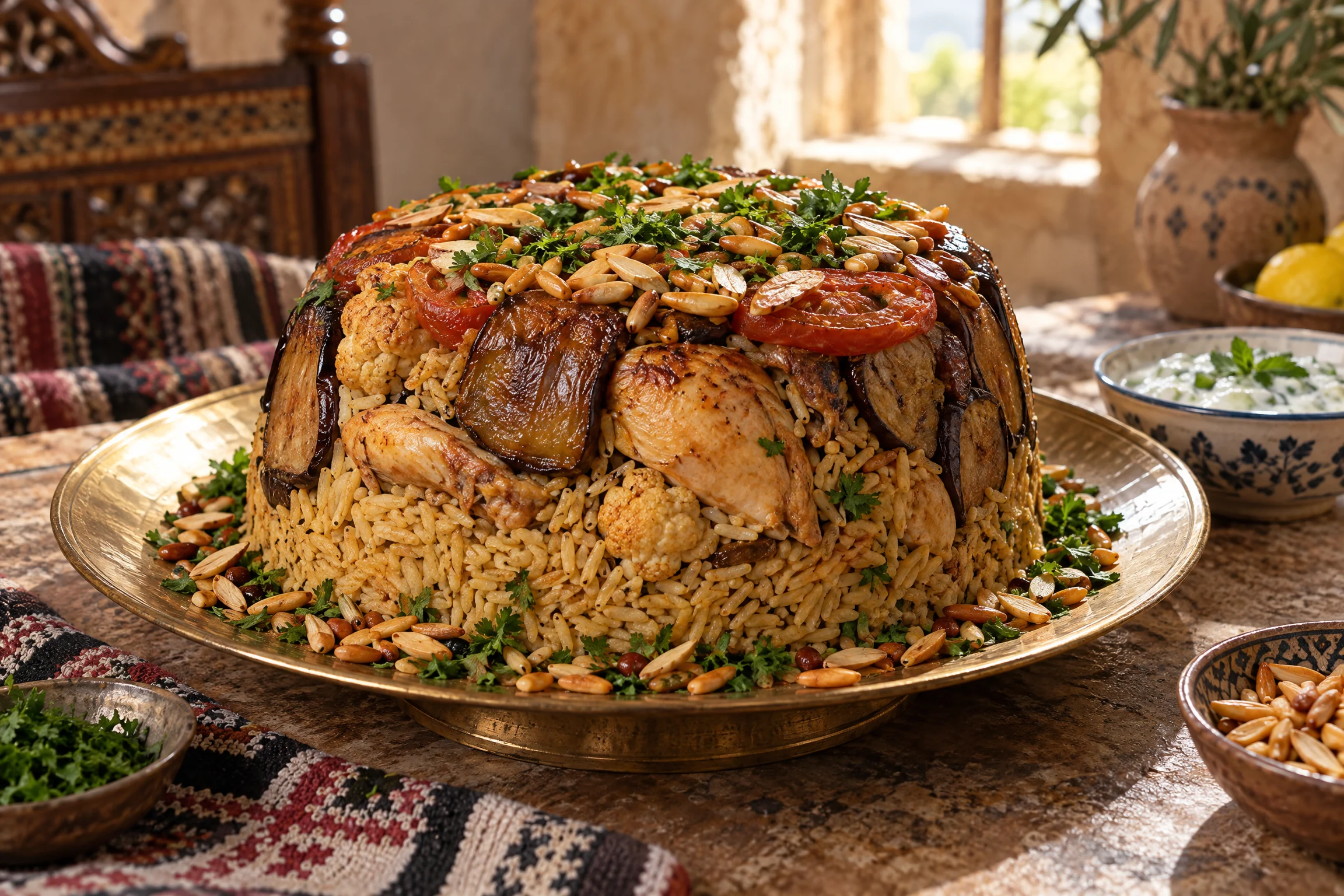
Quick answer: Maqluba (مقلوبة, “upside-down”) is a Palestinian one-pot dish of rice layered over browned vegetables and chicken, cooked in a spiced broth, rested, then flipped onto a platter. This Palestinian home-style version uses chicken, eggplant and cauliflower, serves 6 to 8, and takes about 45 minutes to prepare and 55 to cook, plus 15 to 20 minutes’ rest before the flip.
A Maqluba Recipe Built Around One Beautiful Moment
There is a small pause at the center of a good Maqluba (مقلوبة) recipe. The pot has cooked. The rice is quiet. The lid comes off, and a wide serving platter is set on top. Then, with both hands steady, the whole thing turns over.
That flip is theatrical, but it is not a trick. It is the final step in a careful sequence: a well-seasoned broth, vegetables browned until sweet and savory, rice rinsed and spiced, and enough resting time for the layers to settle. Maqluba is a familiar dish on Palestinian family tables, including in Gaza. The recipe below is a practical home-style version; families may vary the vegetables, spices and meat.
The result is a golden, fragrant centerpiece with tender chicken, soft vegetables, and grains that hold together without becoming heavy.
Maqluba at a glance
- Serves: 6 to 8
- Prep time: 45 minutes
- Cook time: 55 minutes
- Rest before flipping: 15 to 20 minutes
- You will need: a heavy 5- to 6-quart pot with a flat base, and a flat serving platter wider than the pot
- Contains: tree nuts (pine nuts, almonds) and dairy (the yogurt served alongside)
What maqluba means, and why it is cooked this way
Maqluba (مقلوبة) means “upside-down” in Arabic, and the name describes the method exactly. Everything is layered in a single pot—vegetables and meat at the bottom, rice on top—then cooked, rested, and inverted so that the browned layers end up crowning the rice. Maqluba is prepared in homes across Palestine, including Gaza. It is a shared Palestinian home-cooking dish, and households vary the vegetables, meat, rice and spices. This version combines chicken, eggplant and cauliflower.
What makes this Palestinian maqluba recipe work
Three decisions carry most of the flavor.
First, brown the vegetables thoroughly. Eggplant should be deeply golden at the edges, and cauliflower should show toasted brown patches. That color is more than decoration; it brings sweetness and depth to the finished rice.
Second, cook the rice with a fragrant chicken broth rather than plain water. Onion, cardamom, cinnamon, and bay leaf create a gentle background aroma that lets the vegetables remain the focus.
Third, rest the pot. Once the rice has absorbed the broth, turn off the heat and leave the lid in place. The 15 to 20 minute pause gives steam time to redistribute and the starches time to bind the layers.
Ingredients
For the chicken and broth
- 1 whole chicken, about 3.5 lb (1.6 kg), cut into 6 to 8 pieces
- 1 large yellow onion, quartered
- 4 cracked cardamom pods, 1 cinnamon stick, and 2 bay leaves
- Salt, for seasoning the broth
For the vegetables and base
- 2 large globe eggplants (about 700 g), cut into 1/2-inch rounds
- 1 medium head cauliflower, cut into large florets
- 1 large potato, sliced into 1/2-inch rounds (optional)
- 2 firm tomatoes, sliced into thick rounds
- Olive oil or neutral oil for frying the vegetables
For the rice
- 3 cups (about 600 g) long-grain basmati or medium-grain Egyptian rice, rinsed
- 1 1/2 tsp ground allspice, 1 tsp ground cinnamon, and 1 tsp ground turmeric
- 1/2 tsp ground cardamom, 1/2 tsp black pepper, and 2 tsp sea salt
- 5 cups (about 1.2 litres) hot chicken broth, reserved from simmering the chicken
To finish
- 1/3 cup toasted pine nuts and slivered almonds
- Fresh parsley, cucumber yogurt, and lemon wedges, for serving
Preparation
Rinse the rice until the water is mostly clear, then drain it thoroughly. Salt the eggplant rounds and leave them for 15 minutes; pat them dry before cooking. This helps them brown instead of steam.
For the broth, simmer the chicken with the quartered onion, cracked cardamom, cinnamon stick, bay leaves, and salt. Skim the surface as it comes to a boil, then cook gently for 30 to 35 minutes, until the chicken is tender. Strain and keep 5 cups (about 1.2 litres) of the hot broth. Reserve the chicken.
Season the drained rice with allspice, cinnamon, turmeric, cardamom, pepper, and salt. Toss gently so the spices coat the grains without breaking them.
Layering the pot, step by step
1. Brown the vegetables
Fry the eggplant in hot oil until both sides are richly golden. Fry the cauliflower in the same pan until browned at the tips and tender inside. Drain both well on paper towels. For a lighter variation, roast them at 425°F / 220°C with olive oil until deeply colored; this changes the texture slightly but keeps the layered structure intact.
2. Build the base
Brush the inside of the pot with a thin film of oil, then arrange the tomato slices across the bottom. They add moisture and a little acidity, and they help protect the first layer from catching.
3. Add chicken, vegetables, and rice
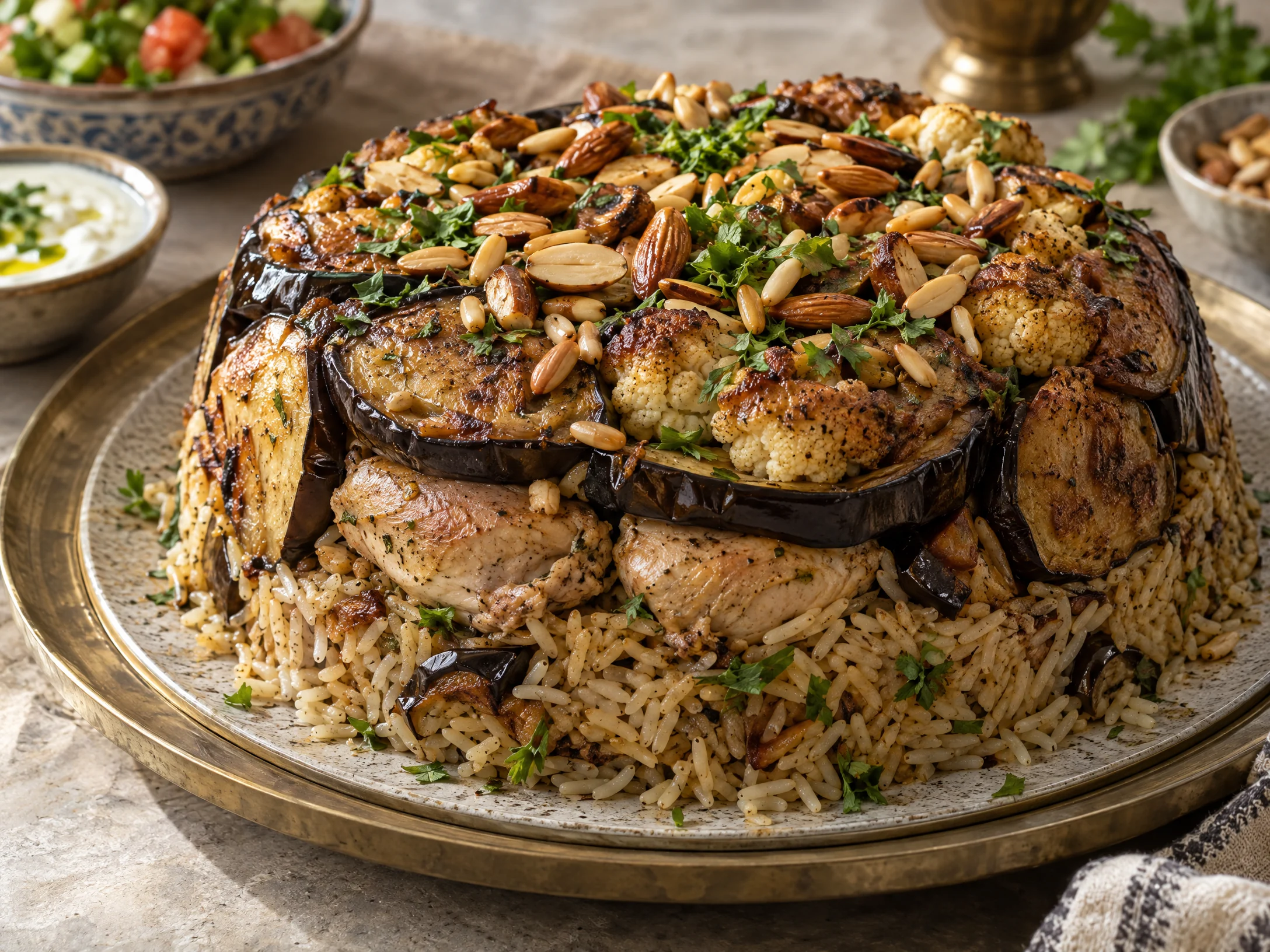
Place the chicken over the tomatoes. Tuck some eggplant rounds upright around the edge of the pot, then fill the center with the remaining eggplant and cauliflower. Pour the spiced rice over everything and press it gently into an even layer.
4. Add the broth and cook
Ladle the hot broth slowly over the back of a spoon so the layers stay in place. The liquid should sit just above the rice, not several inches over it. Bring the pot to a boil, then cover and reduce the heat to its lowest setting. Cook for 25 to 30 minutes, until the broth is absorbed and the rice is tender.
5. Rest
Turn off the heat. Keep the lid closed for 15 to 20 minutes. Do not skip this step; it is what lets the cake hold its shape.
The flip: calm hands, one motion
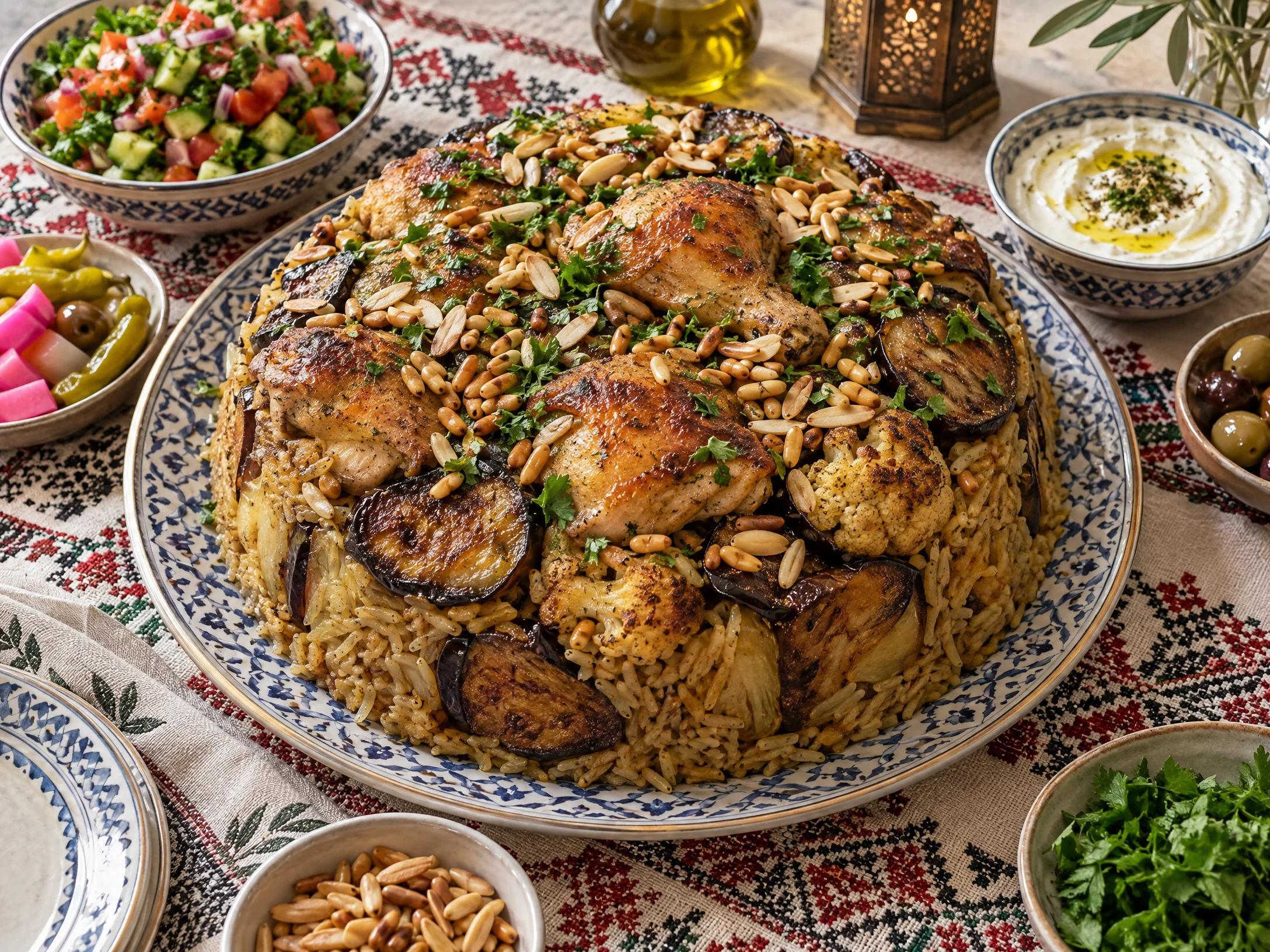
Place a broad, flat platter upside down over the pot. Wear oven mitts and hold the platter firmly against the pot. In one decisive motion, invert them together. Set the platter down, tap the base and sides gently, and wait one minute. Lift the pot straight up rather than rocking it from side to side.
If the first edge releases slowly, pause. A little patience is safer than forcing the cake. Finish with toasted pine nuts, slivered almonds, and a scattering of parsley.
Troubleshooting your maqluba
- It collapsed when flipped. The pot was usually flipped too soon, or there was too much liquid. Measure the broth, keep the lid on for the full rest, and tap the sides before lifting.
- The rice is mushy. Too much broth, or rice that was not drained well after rinsing. Next time, keep the liquid just above the rice.
- The rice is still firm. Add a few spoonfuls of hot broth around the edge, cover, and cook on the lowest heat for another 5 minutes before resting.
- The bottom stuck. Use a heavy, flat-based pot, a thin film of oil, and the tomato layer, and keep the heat at its lowest setting once the pot is covered.
Make ahead, storage, and variations
Browning the vegetables and simmering the chicken can be done a day ahead; refrigerate both and assemble the pot when you are ready to cook. Cool leftover maqluba promptly and refrigerate it within two hours. Eat it within three to four days, and reheat it until steaming hot throughout (165°F / 74°C).
Some cooks use lamb in place of chicken; lamb needs a longer simmer than chicken, so cook it until very tender before layering. For a vegetarian version, omit the chicken, use vegetable broth, and add more vegetables to the layers.
What to serve with maqluba
Serve the hot rice cake with cucumber yogurt, a bright chopped salad, fresh parsley, and lemon wedges. The cool yogurt softens the spices, while tomato, cucumber, and lemon bring freshness to the caramelized vegetables.
For a family table, bring the platter out whole and let everyone see the layers before serving. That shared reveal is part of the pleasure of this dish.
Sources and notes
This home-style formula is informed by several Palestinian maqluba references, including Reem Kassis, The Palestinian Table (2017); Christiane Dabdoub Nasser, Classic Palestinian Cookery (2001/2008); Eat Palestine’s Maqluba recipe; and Sami Tamimi’s Palestinian maqluba with spicy salad and pickles. The ingredient amounts here are a measured home adaptation informed by those references, not a transcription of one source. The photographs illustrating this recipe are original editorial food images created for Gaza Gifts; they are not documentary photographs.
What to Read Next
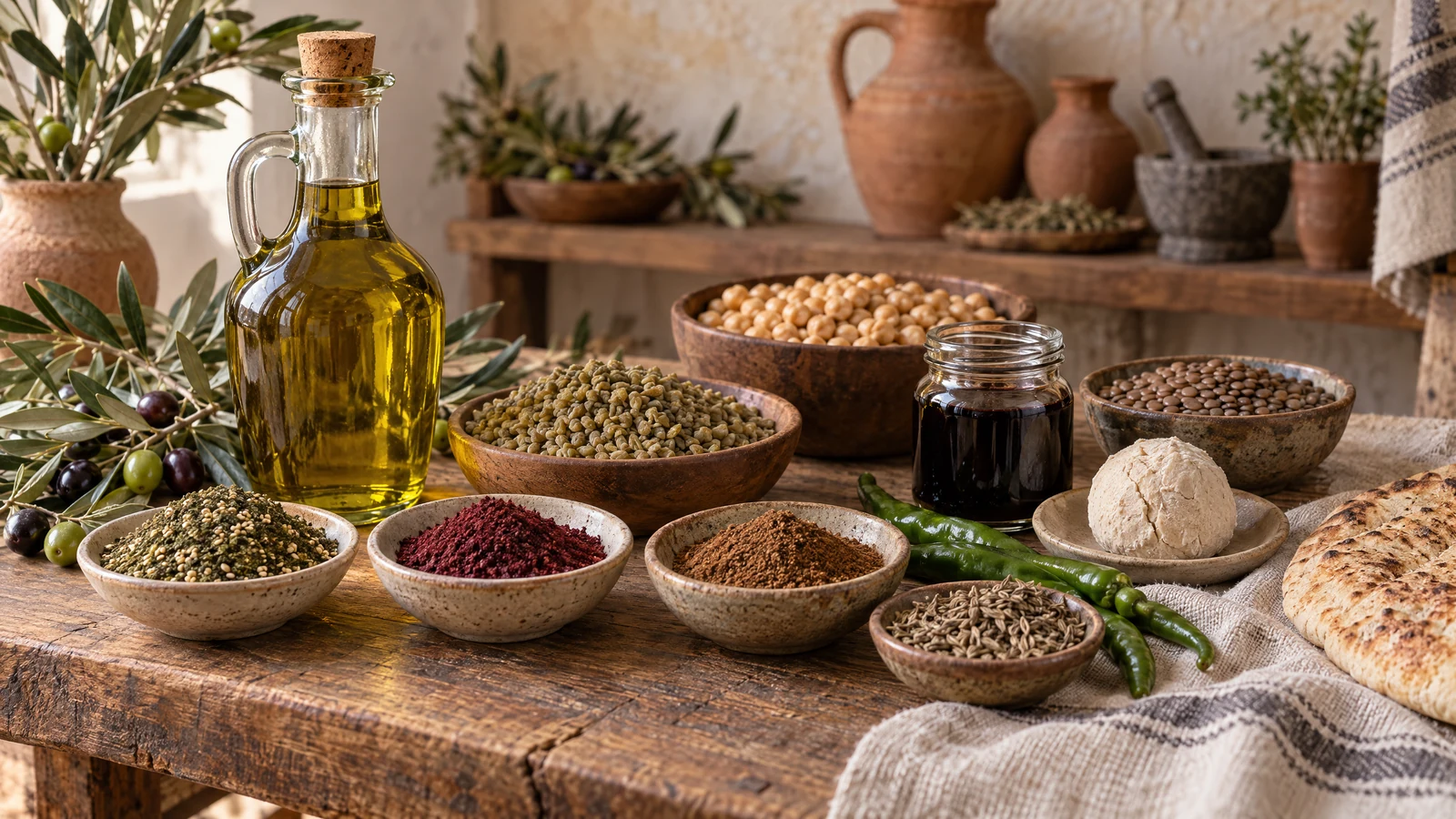
- Explore the ingredients behind Palestinian home cooking in The Palestinian Pantry Guide.
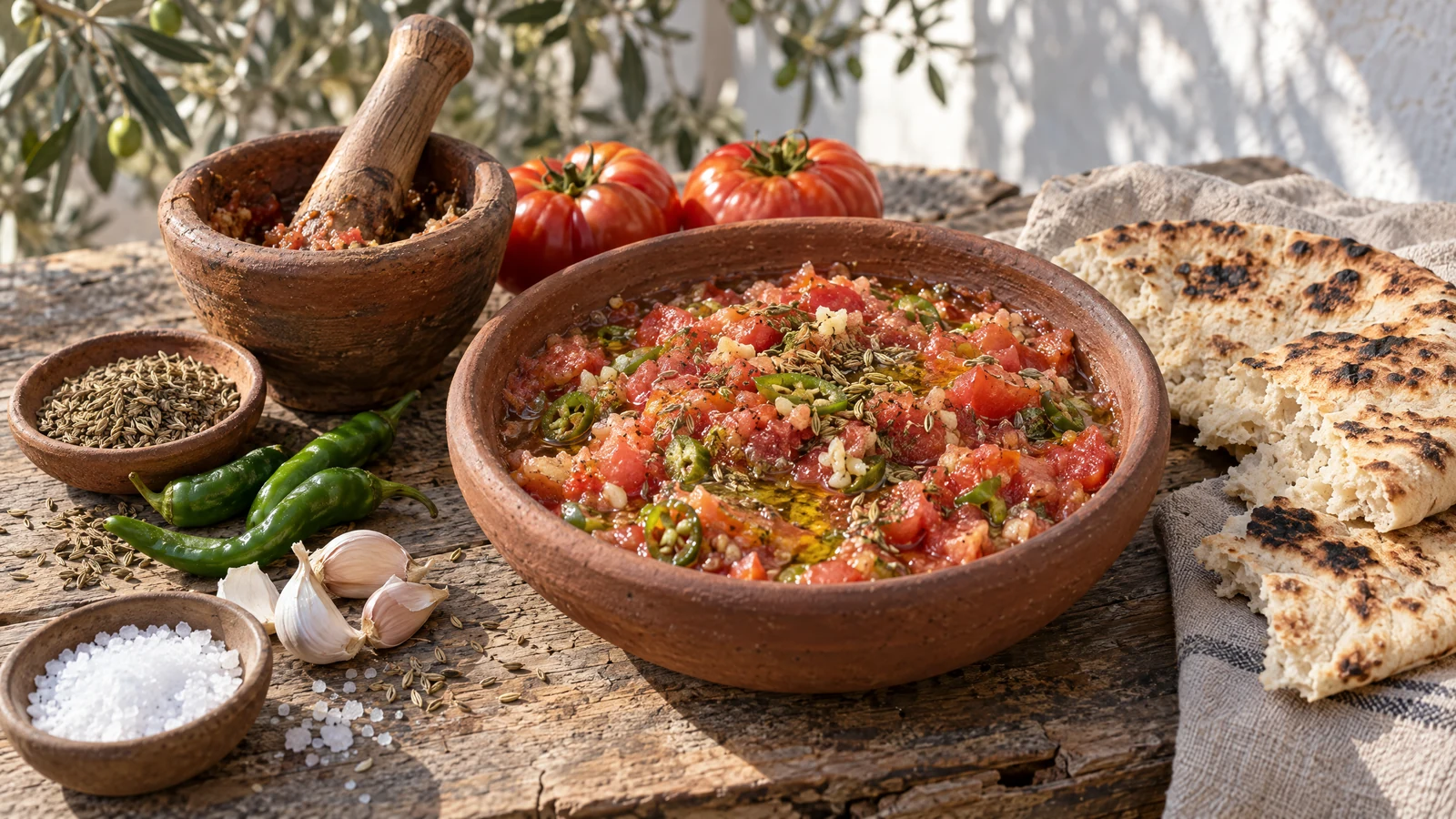
- Pair the dish with the bright heat of Gazan Dagga Salad Recipe.
- Cooking for someone who loves Palestinian food? See Thoughtful Palestinian Gifts.