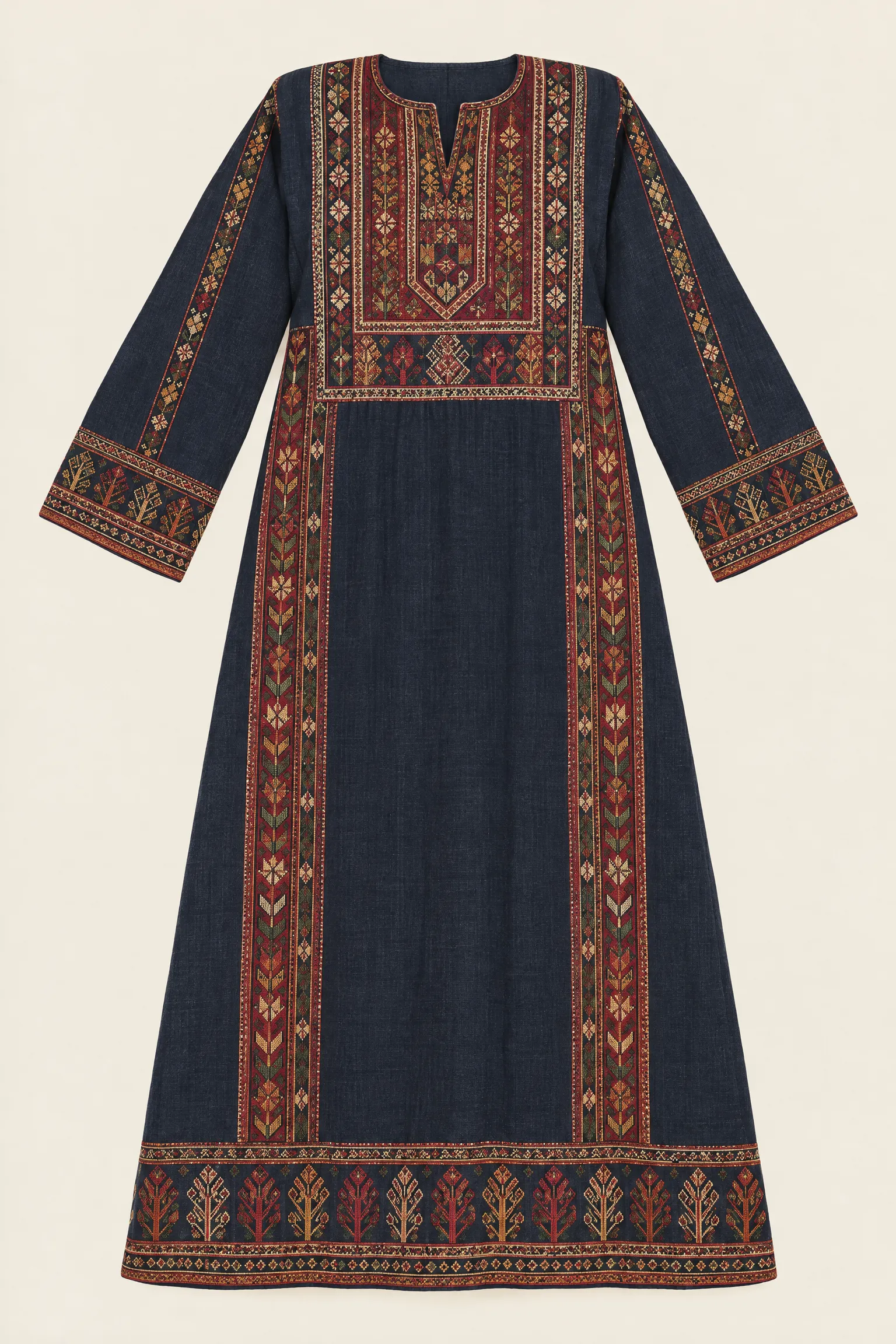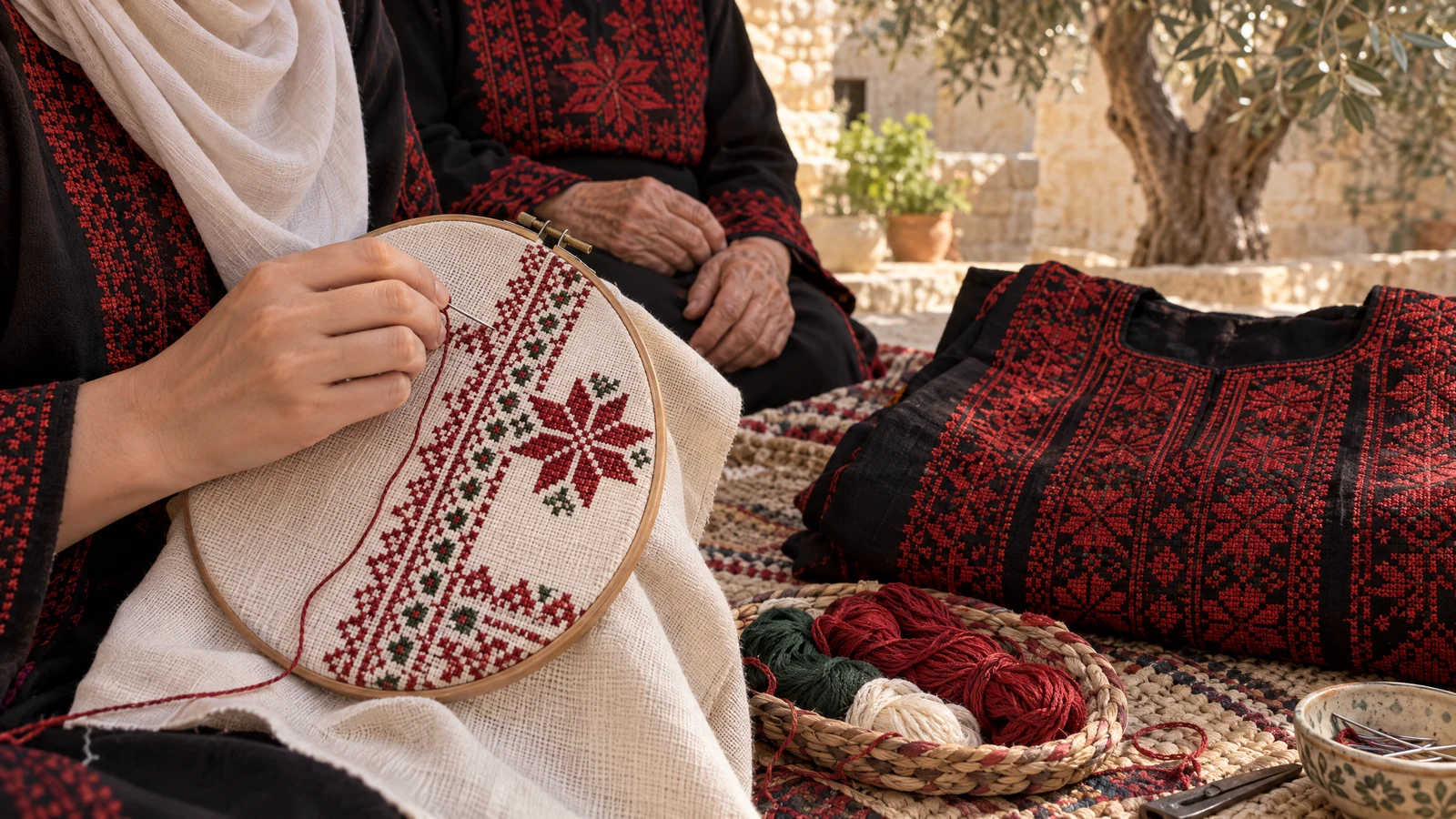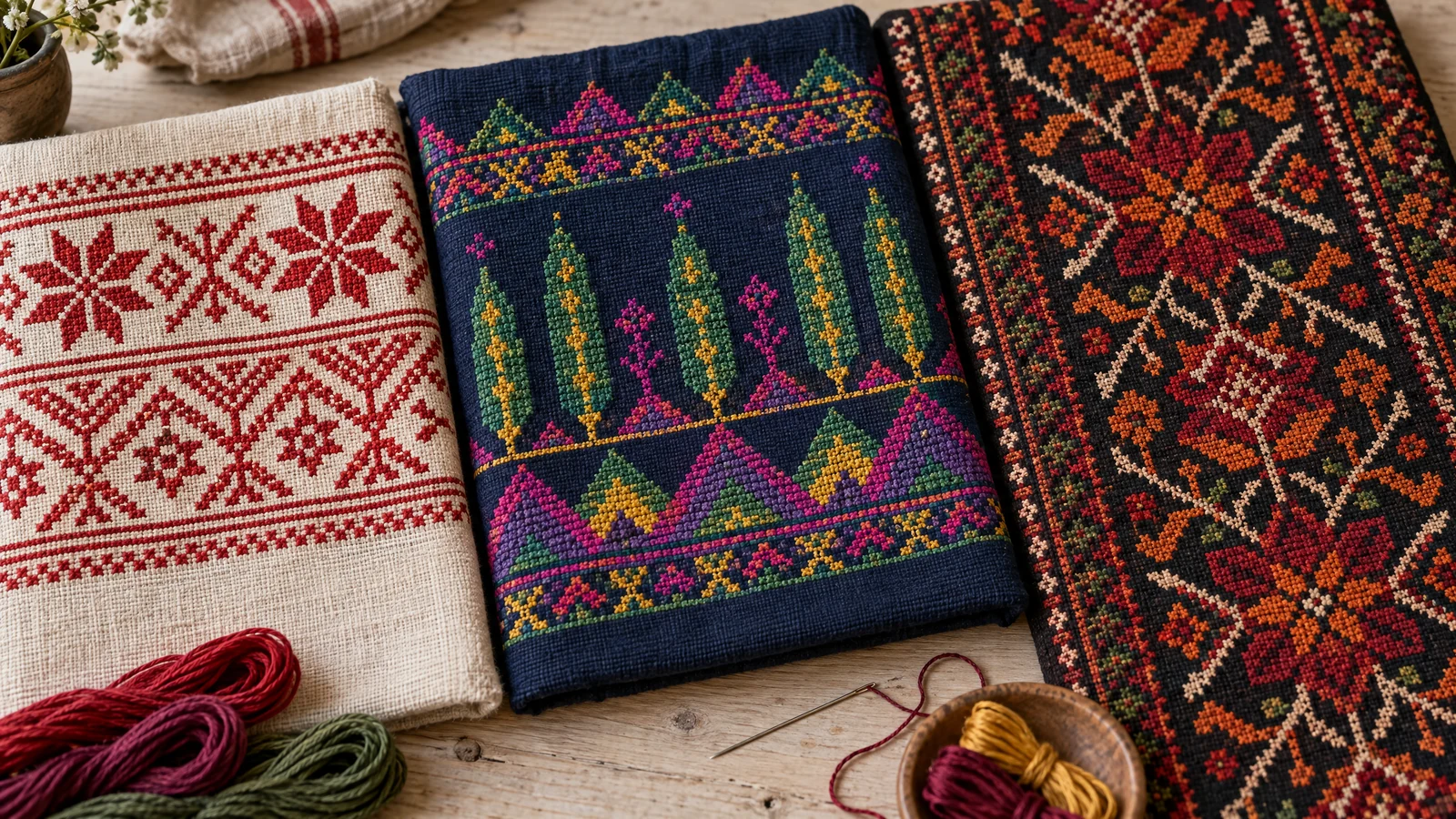
Quick answer: To preserve an antique Palestinian thobe or piece of tatreez, handle it as little as possible and always supported, store it flat in a dark, dry place on acid-free tissue with padded folds, keep it away from light, damp and pests, and do not wash, iron, steam or frame it yourself. Ask a textile conservator before any cleaning or treatment, and record the family’s knowledge of the piece alongside it.
An old Palestinian thobe is not simply a piece of clothing that has been put away. It may carry family memory, skilled handwork, regional history and the marks of the people who cared for it. The embroidery can look strong while its fibres, dyes and seams have become fragile with age.
That is why caring for an antique thobe or a treasured piece of tatreez (تطريز) is different from caring for everyday clothing. The safest approach is usually preventive: handle it less, support it properly, protect it from light and dust, and avoid cleaning or repairing it until its condition has been assessed.
This guide offers practical first steps for family heirlooms. It is not a substitute for a textile conservator’s examination. If a piece is historically significant, very fragile, stained, mouldy or actively deteriorating, professional advice should come before treatment.
Begin with observation, not cleaning
Before moving an heirloom, take a moment to look at it where it is. Is the fabric stable, or are there splits, holes, brittle areas or loose threads? Are the embroidered sections heavier than the ground fabric? Are there metallic threads, beads, applied fabrics or areas where the colours appear to have changed?
Do not pull the garment open to inspect it if it resists movement. A weak seam or fold can tear under its own weight. If it is already lying flat, photograph the front and back, the main embroidered areas and any visible damage without placing objects on top of it.
Record what the family knows: the name of the person who kept it, any remembered maker, the village or region associated with it, approximate dates, and how it was used. Keep family testimony distinct from facts confirmed by a catalogue or document. If the precise place of origin is uncertain, do not assign one based only on a motif or colour.
A careful record is part of preservation. It keeps the textile’s story with the object and reduces the risk that later descriptions will turn family memory or a visual guess into an unsupported historical claim.
Handle an old thobe with support
Unnecessary handling is one of the avoidable sources of damage to historic textiles. Fibres can be weakened by age, earlier repairs, light exposure and repeated stress along folds or seams. A garment may appear sturdy until it is lifted by one shoulder or allowed to hang from a small area.
When handling is necessary:
- Clear a large, clean surface before moving the textile.
- Wash and thoroughly dry your hands; remove rings, bracelets, watches and anything that could catch a thread.
- Ask another person to help with a large or heavy garment.
- Slide a clean, rigid support board or tray beneath the textile rather than lifting it by its edges.
- Support the whole piece and move slowly, with a planned route and a place ready to receive it.
- Avoid picking it up by the neckline, sleeves, cuffs or embroidered chest panel.
Do not shake an old thobe to remove dust. Do not pull at loose threads, brush the embroidery, or try to flatten a stubborn crease by stretching the cloth. If the textile is brittle or already splitting, stop and seek specialist advice before moving it again.
Why home washing is usually the wrong first step
The instinct to wash an old garment is understandable. But an antique embroidered textile may contain fibres and dyes that respond differently to water, detergent and friction. Washing can cause colours to bleed, threads to shrink or swell, seams to distort, and weakened areas to tear. Previous repairs, metallic elements and accumulated dirt can make the outcome harder to predict.
For this reason, do not put an antique thobe in a washing machine, soak it in a basin, apply stain remover, bleach or household detergent, or attempt spot cleaning with a damp cloth. Avoid steam cleaning, ironing and pressing as well. Heat, moisture and pressure can affect fragile fibres and embroidery, and an iron can catch on raised stitches.
Even dry cleaning should not be treated as a safe default. A general clothing cleaner may not have the experience or equipment required for a fragile historic textile. Ask for an assessment by a conservator who works with textiles before agreeing to any cleaning method.
If the piece has a stain, note its location and photograph it. Do not rub, scrape or apply a home remedy. Sometimes leaving a stable stain untreated is less harmful than trying to remove it.
Store the textile flat, dark and supported
For many historic textiles, flat storage is the simplest way to reduce strain. Choose a clean, dry, dark place with reasonably stable conditions and good air circulation. Avoid attics, damp basements, exterior walls with signs of moisture, direct sunlight, radiators and other heat sources.
A suitable archival box or clean drawer can provide support and protection from dust and light. Use unbuffered acid-free tissue or clean, prewashed cotton sheeting as a lining. Avoid ordinary cardboard, newspaper, acidic paper, untreated wood and adhesives in direct contact with the textile.
Where space allows, lay the thobe flat with as few folds as possible. If a fold is unavoidable, pad it with soft, unbuffered acid-free tissue so that the crease is broad rather than sharp. Do not press the textile into a box that is too small. Avoid stacking heavy objects on top, and do not place several garments together without a clean protective layer between them.
Do not store a textile in a sealed dry-cleaning bag or a damp plastic container. These can trap moisture and create conditions that encourage mould. Keep the storage area clean, inspect it periodically, and look for signs of insects, droppings, fresh holes or powdery debris. Do not use mothballs or scented products beside the garment.
For a large textile that cannot be stored flat, rolling may be an option, but it needs an appropriate wide support tube and a protective interleaving layer. Because embroidered surfaces and raised details can be vulnerable to pressure, ask a textile conservator before rolling a valuable or fragile thobe.
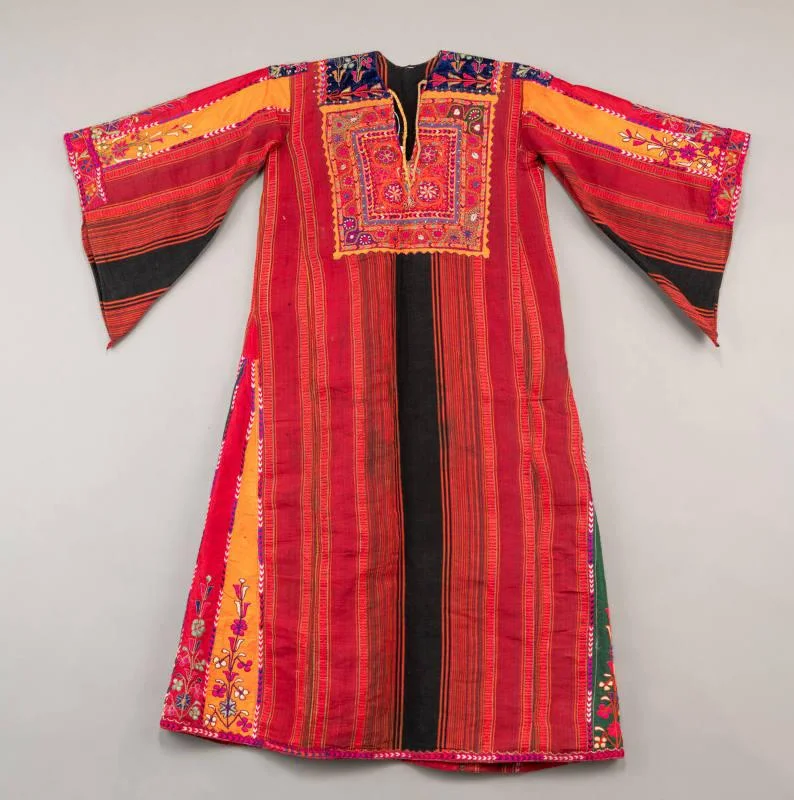
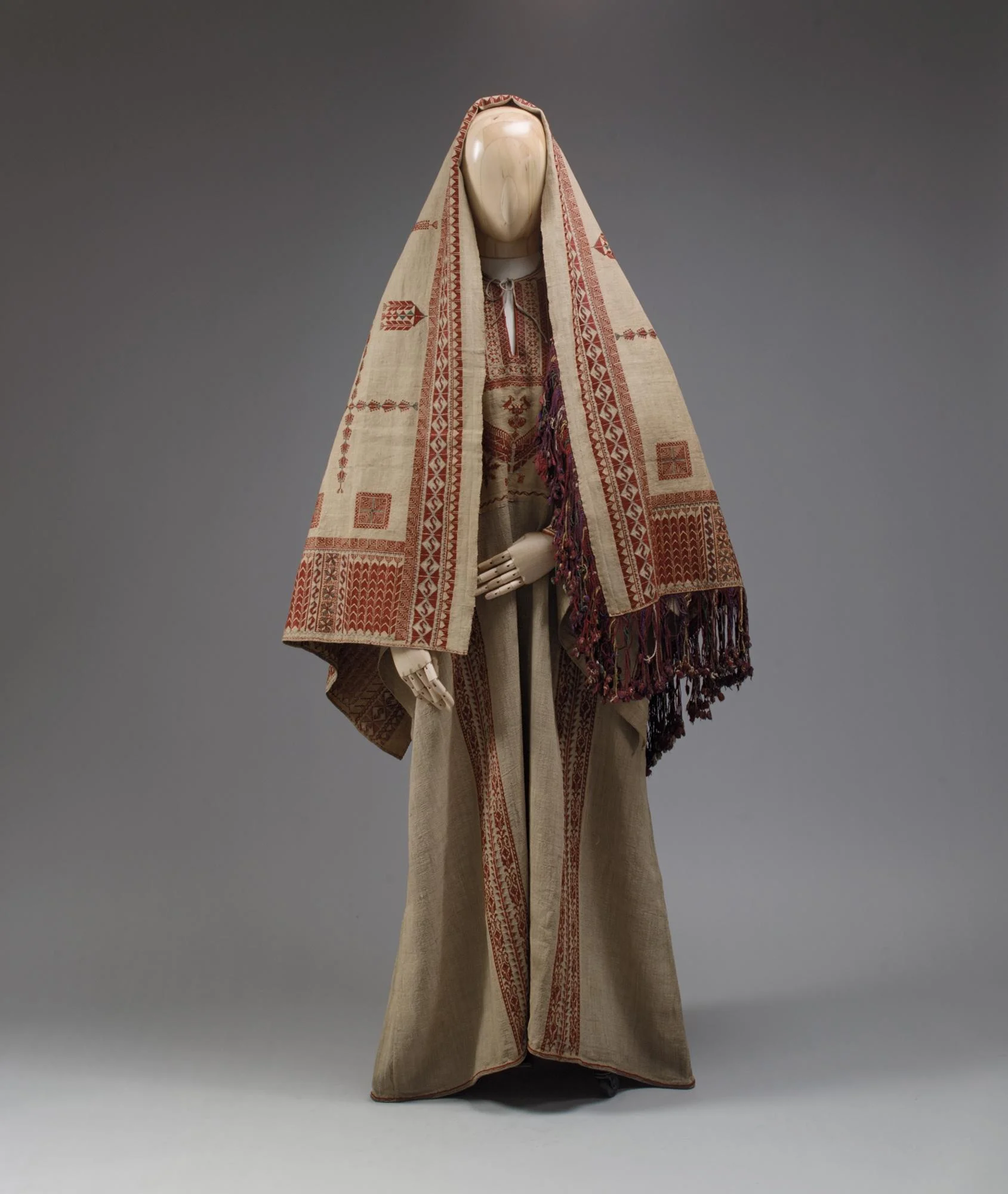
Detail from a nineteenth-century Bethlehem dress in the Metropolitan Museum of Art collection. The museum record identifies silk, silver and gold in the embroidery. Image: The Metropolitan Museum of Art, CC0.
Protect it from light, humidity and pests
Light damage accumulates. Direct sunlight and strong indoor lighting can fade dyes and weaken fibres, and the change may not be reversible. Store heirlooms in darkness when they are not being viewed. If you display a piece, keep it away from windows and bright lamps, use suitable UV-filtering glazing where appropriate, and limit the time it remains on display.
Humidity and temperature matter too. A damp environment can encourage mould, while large fluctuations can place stress on fibres and seams. There is no need to turn a family home into a museum store, but do choose the most stable, dry location available and avoid placing the textile against a wall that becomes damp.
Inspect the storage space as well as the garment. Insects can hide in folds and dark corners. If you find signs of an infestation, separate the affected textile from other pieces without shaking it, and consult a conservator or a qualified collections-care professional. Do not improvise chemical treatments or freeze a fragile heirloom without professional guidance; the correct procedure depends on the materials and condition.
What does folding damage look like?
A sharp fold concentrates stress along a narrow line. Over time, fibres at that line can weaken and split, especially when a textile is repeatedly folded in the same place or stored under pressure. Padding folds and changing their position when necessary can help reduce that stress.
The photograph below documents folding damage to a textile in a conservation context. It is an example of a general textile problem, not a photograph of a Palestinian thobe.
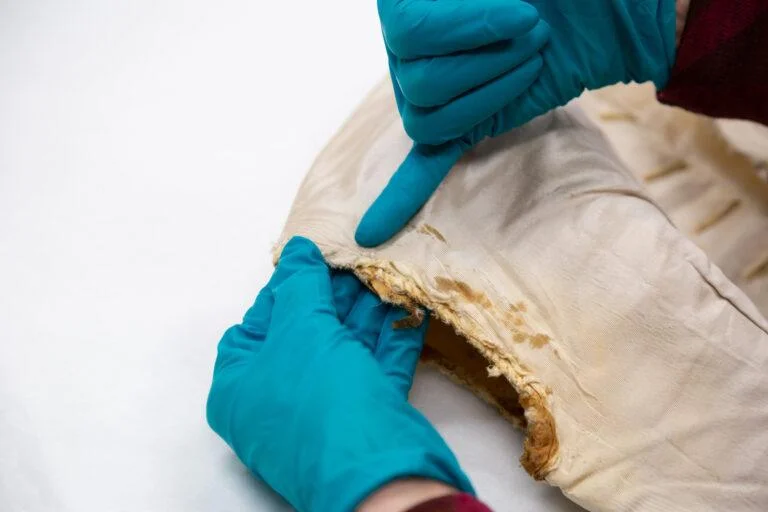
Example of textile damage caused by folding, photographed by Bob Herskovitz for the Minnesota Historical Society in 1985. Licensed under CC BY-SA 4.0.
Is hanging a thobe safe?
Not every garment should be hung. Hanging places the textile’s weight on the shoulders and supporting seams. If the fabric is weak, the shoulders are damaged, the garment is heavily embroidered, or the cut is delicate, that weight can stretch or tear it.
A stable garment may sometimes be stored on a properly padded support, with the sleeves and interior supported and a breathable protective cover used against dust. But a wire hanger, a narrow plastic hanger or a crowded wardrobe is not suitable for an heirloom. When in doubt, choose supported flat storage and ask a conservator before hanging.
Framing an embroidered panel without harming it
Framing can protect a small embroidered panel from handling and dust, but only if the mounting method supports the textile without damaging it. The fabric should not be glued, taped, pinned through important embroidery or stretched tightly across a board. Adhesives and unsuitable backing materials can stain or weaken fibres over time.
A textile conservator or specialist mount-maker can recommend a support that distributes the textile’s weight and avoids unnecessary tension. Ask about the materials used behind the textile, how it is attached, whether the glazing filters ultraviolet light, and whether the work can be removed safely for future inspection.
Remember that glazing does not make light harmless. A framed piece should still be kept away from direct sunlight and strong lighting, and displayed for limited periods rather than left on a bright wall indefinitely.
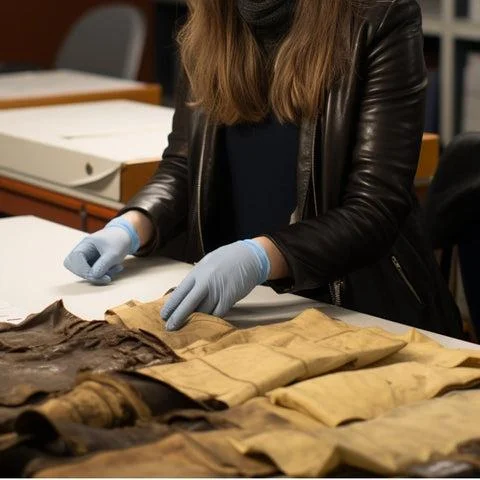
Textile collection preservation at the Shalva Amiranashvili Art Museum in Tbilisi, Georgia. This photograph illustrates museum conservation work; it does not depict a Palestinian garment or a Palestinian collection. Image: USEmbassyTbilisi, public domain.
When should you contact a textile conservator?
Seek professional advice before treatment if the textile has any of the following:
- brittle fabric, splits, holes or seams that are opening;
- loose, detached or heavily weakened embroidery;
- colours that appear to transfer, bleed or powder;
- metallic threads, beads or applied materials that are corroding or detaching;
- mould, a persistent musty smell, or evidence of water damage;
- insect activity or fresh damage;
- old repairs that are pulling against the original fabric;
- a family, historical or cultural significance that makes the risk of experimentation unacceptable.
A conservator can examine the materials, document the condition and explain which actions are safe, which should be avoided, and whether any treatment is necessary. Ask about their experience with historic embroidered textiles and request a written treatment proposal before work begins.
Preserve the story as carefully as the stitches
The care of a Palestinian heirloom includes more than its physical condition. Keep any known family history, place names, dates, photographs and previous ownership information with the textile. Record uncertainty honestly. A garment associated by family memory with a particular village should not automatically be given a more precise museum-style attribution unless the evidence supports it.
This care for context matters in the wider documentation of Palestinian dress. In her 2026 study of museum collections and visual archives, dress historian Wafa Ghnaim argues for accurate cultural and geographic attribution, oral history, and attention to the harm caused when Palestinian garments are mislabelled or separated from their context. That approach is useful beyond museums: it reminds families and collectors to preserve the story alongside the object.
If the textile is regularly worn, consider keeping the original safely stored and using a contemporary reproduction for events. A reproduction can carry the craft forward without placing additional stress on an irreplaceable heirloom.
Common mistakes to avoid
- Washing it because it looks dusty: dust does not justify the risks of unassessed wet cleaning.
- Ironing a crease flat: heat and pressure can damage fibres and raised stitches.
- Hanging it on an ordinary hanger: the garment’s weight may strain the shoulders and seams.
- Folding it sharply in the same place: repeated creases can become weak lines and eventually split.
- Storing it in newspaper or ordinary cardboard: acidic materials can contribute to deterioration.
- Using mothballs, perfume or scented sachets: these are not substitutes for clean, dry storage and pest inspection.
- Assuming a motif proves a village of origin: record what is known and distinguish family memory from documented provenance.
Frequently asked questions
Can I wash an antique Palestinian thobe at home?
It is safest not to. An antique garment should be assessed by a textile conservator before any wet cleaning or stain treatment. The fibres, dyes, embroidery, repairs and condition all affect what may be possible.
Should I store an embroidered thobe folded or hanging?
Flat storage in a suitable archival box is generally preferable when space allows. If folding is unavoidable, pad the folds with unbuffered acid-free tissue. Hanging should be considered only for a garment strong enough to support its weight and with an appropriate padded support.
Can I iron or steam old tatreez?
No—not as a home-care step. Avoid heat, steam and pressure until a textile conservator has assessed the piece.
What is the safest way to frame Palestinian embroidery?
Use a textile conservator or specialist mount-maker who can support the textile without glue, damaging stitches or excessive tension. Choose suitable UV-filtering glazing, avoid direct light and limit display time.
Sources and further reading
- Canadian Conservation Institute: Caring for textiles and costumes
- Canadian Conservation Institute: Basic care for textiles
- Canadian Conservation Institute: Flat storage for textiles
- George Washington University Museum and The Textile Museum: Caring for textiles
- George Washington University Museum and The Textile Museum: Storing textiles
- National Park Service: Curatorial Care of Textile Objects
- Wafa Ghnaim: Archiving the Thobe — An Ethical Approach to Palestinian Dress in Museum Collections and Visual Archives