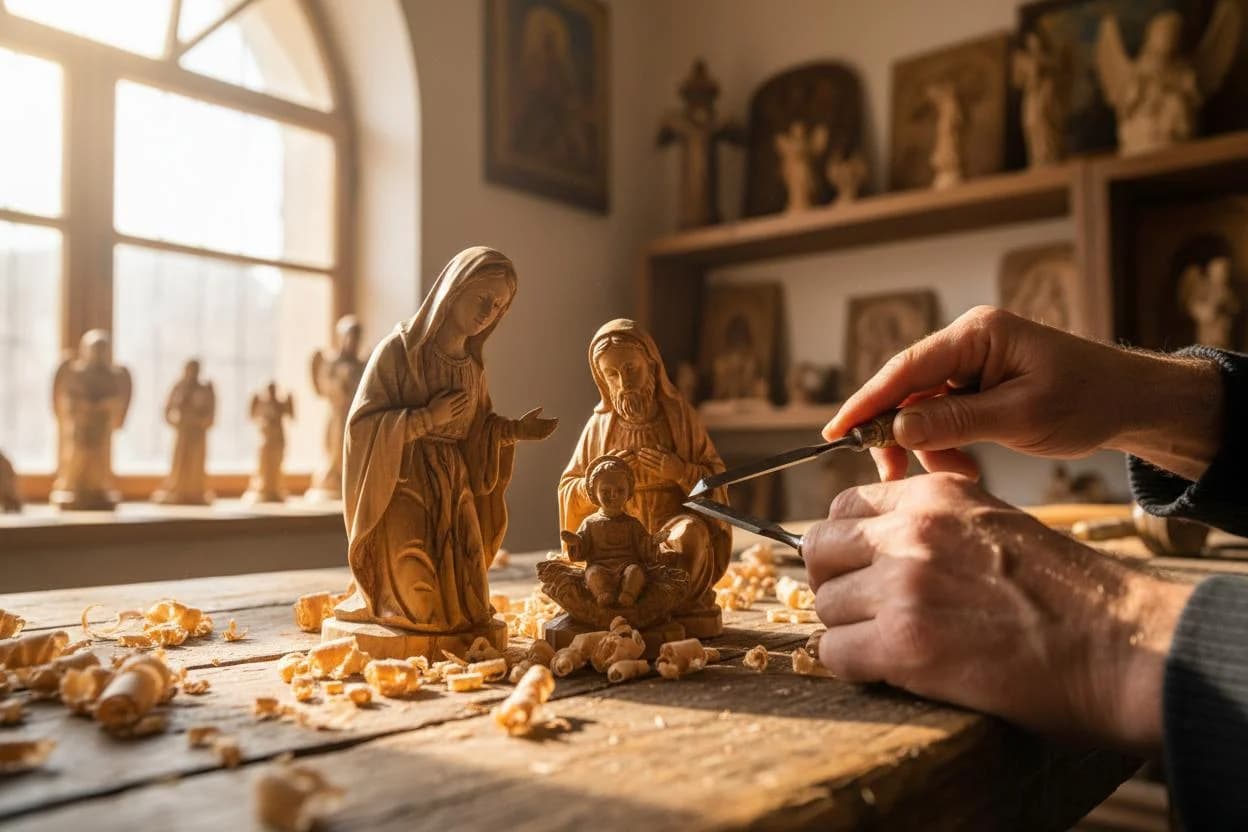
Christmas in Palestine is not one uniform celebration. It is a season of worship, family gatherings, food, music, and local traditions shaped by the different Christian communities who call this land home. In Bethlehem, the city associated around the world with the Nativity, the season also brings attention to Palestinian craftspeople whose olive-wood carvings carry a local skill from workshop to home.
For visitors and readers discovering Palestinian heritage, these traditions offer more than a festive image: they connect faith, place, food, and the livelihoods of families who keep cultural practices alive.
Bethlehem and the different Christmas calendars
Bethlehem’s Christmas season is marked by more than one date. Many Latin Catholic and Protestant communities celebrate on December 25. Many Greek Orthodox communities celebrate on January 7, while the Armenian Patriarchate of Jerusalem marks Christmas on January 19. These differences reflect church traditions and calendars, rather than a disagreement about the meaning of the feast.
The public celebrations can include processions through Bethlehem’s historic streets toward Manger Square and the Church of the Nativity. The route along Star Street has a special place in the city’s Christmas story: Bethlehem’s municipality describes it as a traditional route for patriarchal processions. The exact programme and scale of public festivities can change from year to year, so visitors should check current local announcements before travelling.
The Church of the Nativity is a place of worship and pilgrimage, but Bethlehem’s Christmas life is not confined to its best-known landmark. It is also carried by households, church communities, local businesses, musicians, craftspeople, and neighbours preparing for the season.
A taste of the season: burbara and family recipes
One seasonal food tradition associated with Palestinian Christian communities is burbara (بربارة), a sweet dish made with wheat and other grains and commonly flavoured with ingredients such as sugar, anise, and nuts. It is linked to the feast of Saint Barbara, celebrated in early December. Food writer and Bethlehem chef Fadi Kattan has described burbara as a seasonal marker that begins the festive period for some families.
As with many Palestinian dishes, there is no single household recipe that represents everyone. Ingredients, texture, toppings, and preparation can differ between families. The value of the dish lies not only in what goes into the pot, but in the memory and story attached to preparing and sharing it.
Christmas meals also vary from household to household. Some families prepare a special lunch or dinner, bake cakes and sweets, or gather around recipes passed down through generations. It is better to understand these as overlapping family traditions than to imagine one fixed menu followed by every Palestinian Christian family.
Bethlehem’s olive-wood carving tradition
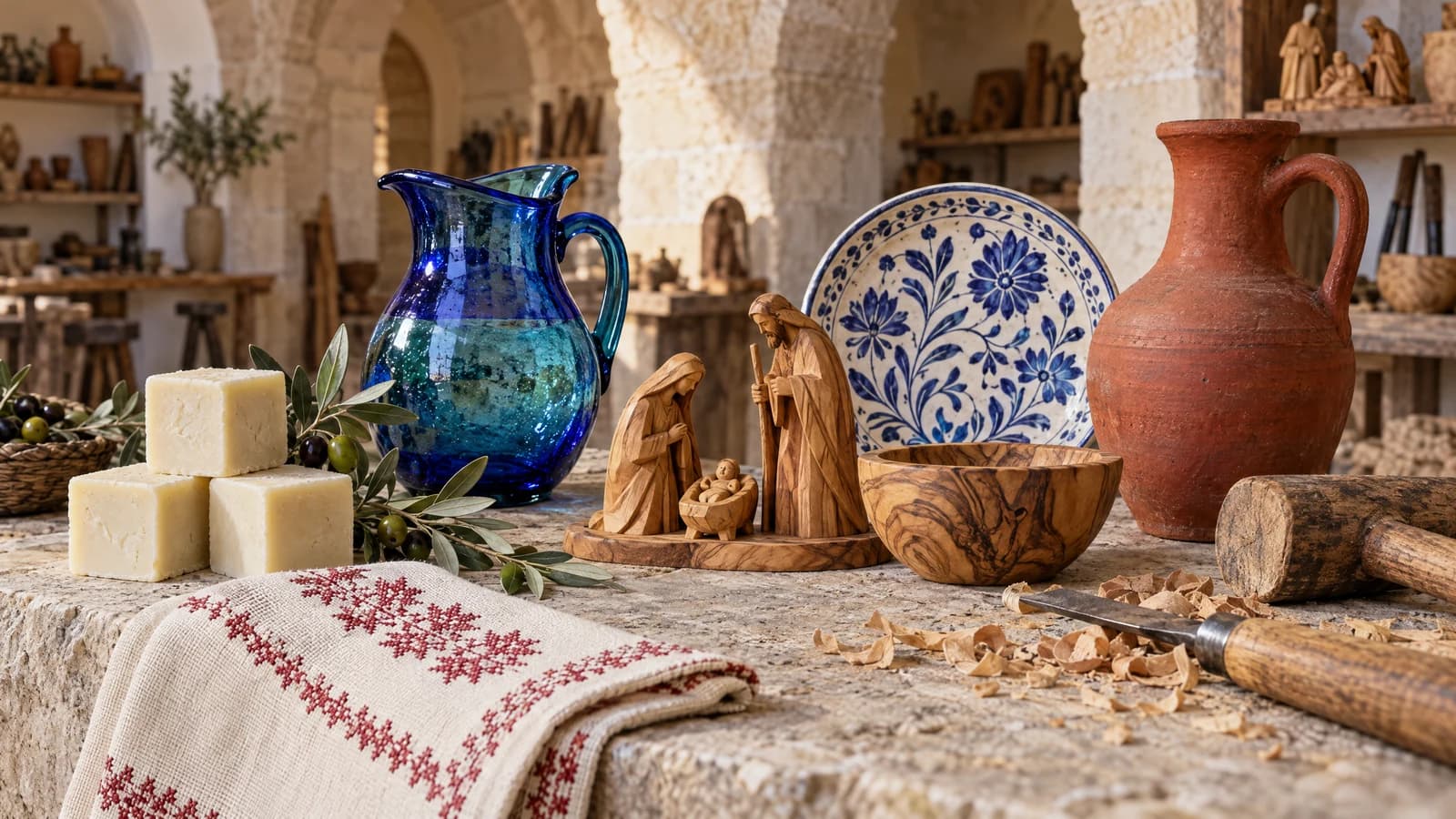
The olive tree is deeply connected to Palestinian landscapes and livelihoods, and olive wood has become one of Bethlehem’s best-known craft materials. In Bethlehem and nearby Beit Sahour, artisans carve olive wood into Nativity scenes, crosses, rosaries, ornaments, boxes, and other objects. The work depends on the grain and colour of the wood, patient handwork, and skills often learned within families and workshops.
The craft is also tied to the history of pilgrimage. Visitors have long sought locally made religious objects, while workshops have adapted their products to changing customers and circumstances. Historical accounts differ on exactly when the craft began, so it is more accurate to describe it as a long-standing tradition than to assign a single uncontested origin date.
A carved Nativity scene is more than a seasonal decoration. It is a crafted object made in a specific place by people whose work sustains a local tradition. If you are buying one, look for clear information about where it was made, who made or supplied it, and whether the seller can identify the workshop. Supporting Palestinian artisan cooperatives and family-run workshops can help keep skills and income rooted in the community.
How to choose a meaningful Palestinian Christmas keepsake
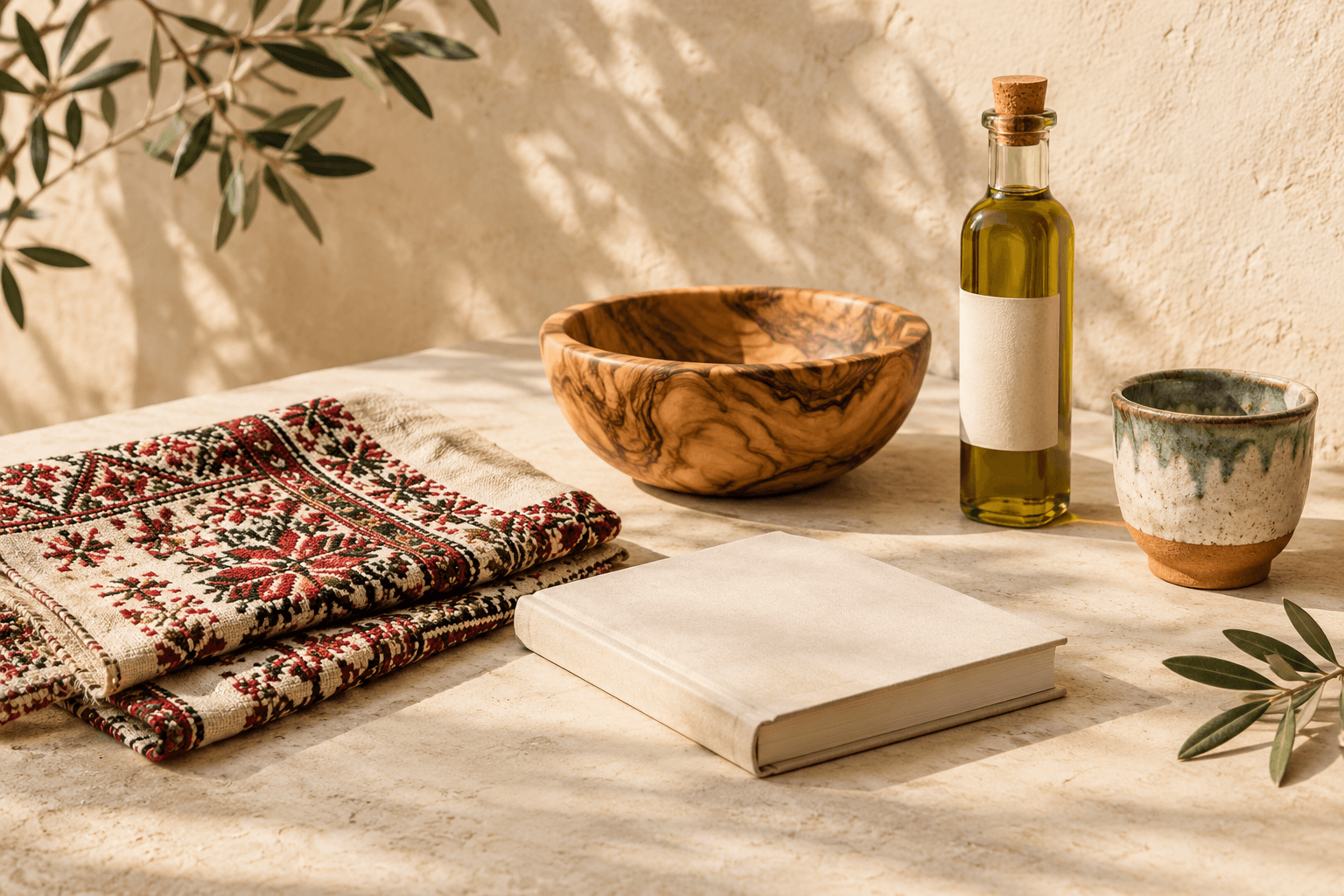
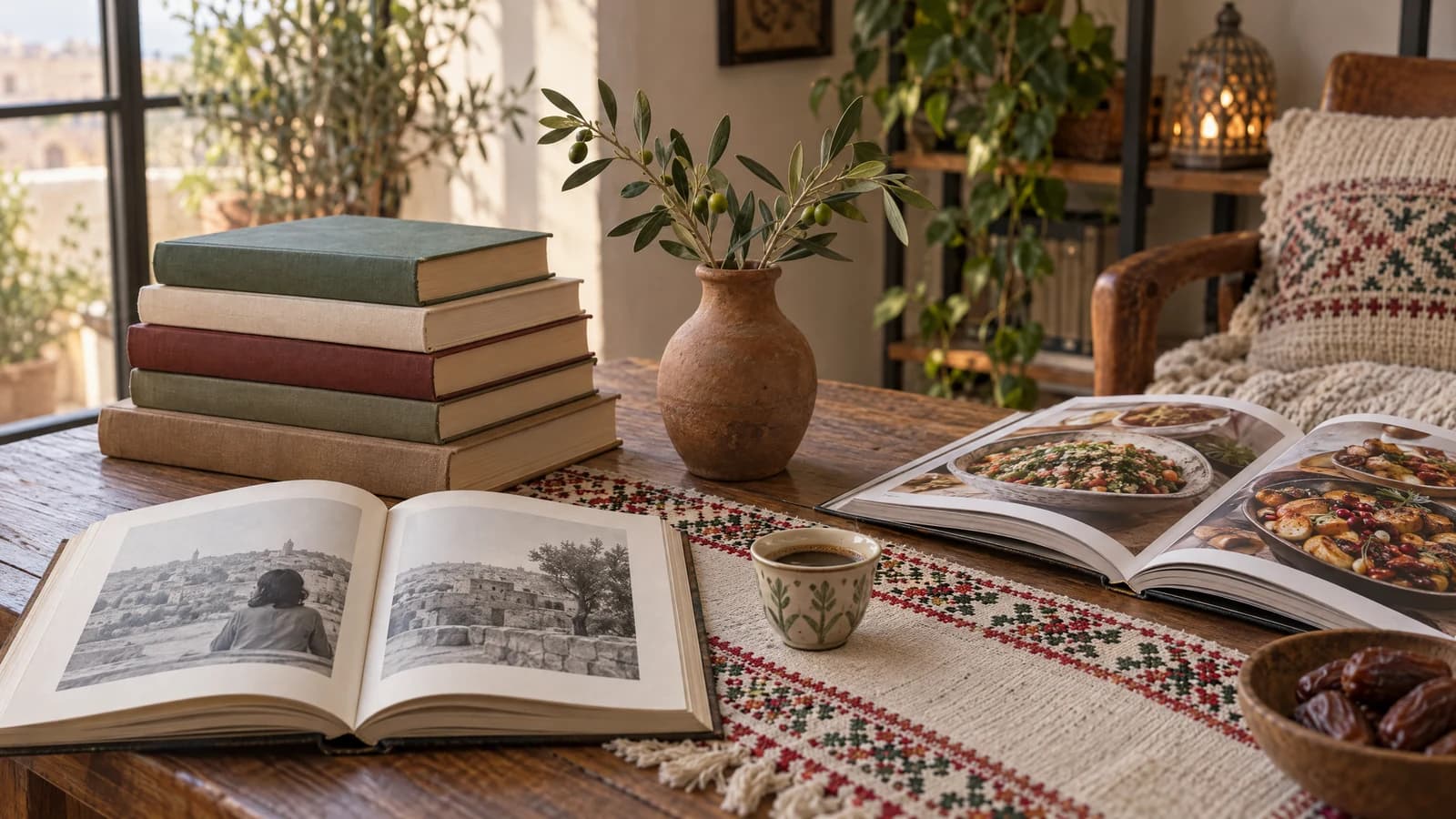
A thoughtful keepsake does not need to be expensive. Consider a small olive-wood ornament, a hand-carved Nativity scene, a locally made object, or a book that offers a deeper understanding of Palestinian life and history. When possible:
- Ask about its origin. “Made in Bethlehem” or “made in Beit Sahour” should describe a real place of production, not simply a style.
- Look for the maker. A named workshop or cooperative gives you a clearer connection to the people behind the object.
- Choose useful, lasting pieces. A small carving or ornament that will be kept and cared for can be more meaningful than a mass-produced souvenir.
- Respect the story. Religious objects have significance for many people; learn about the craft without treating the community’s faith as a decorative theme.
For readers who want to explore Palestinian crafts beyond Christmas, our guides to historic Palestinian craft traditions and ethical Palestinian gifts offer further context.
A living tradition, not just a postcard
Bethlehem’s Christmas traditions belong to the people who practise them: families, clergy, cooks, musicians, shopkeepers, and craftspeople. They are not identical in every home or community, and they continue to change with local circumstances. A meal like burbara carries family memory; a procession connects worship with the city’s streets; an olive-wood carving carries the work of an artisan into another home.
To learn about Christmas in Palestine is therefore to look beyond a single date or image. It is to pay attention to the people, skills, and everyday acts of care that keep heritage alive.