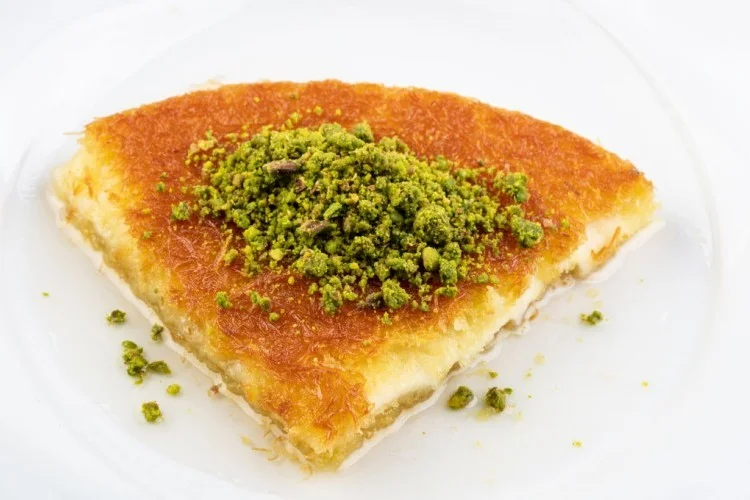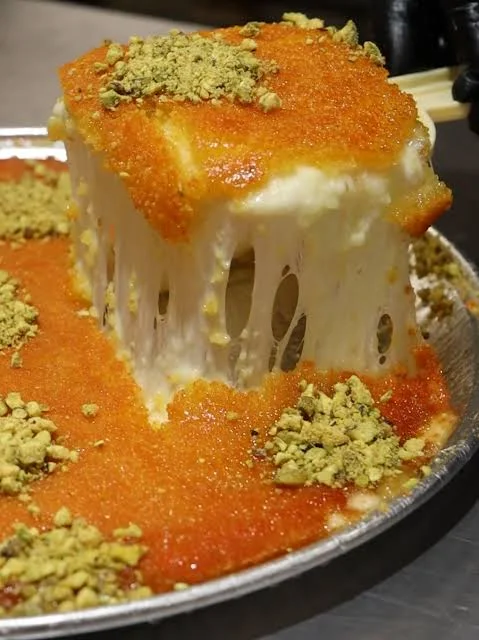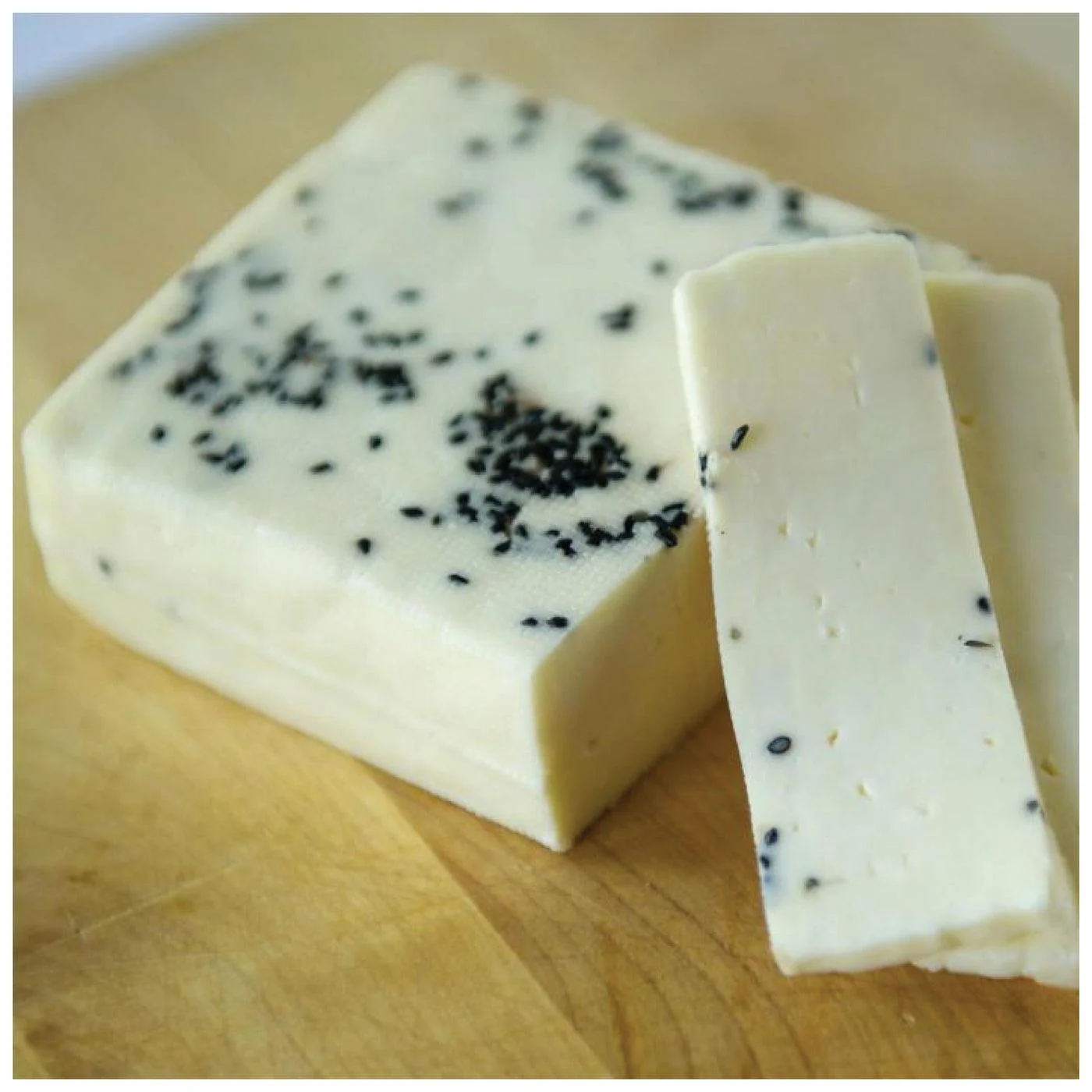
Quick answer: Nabulsi cheese (جبنة نابلسية) is a white brined cheese named after Nablus, Palestine. It is known for its salty flavor and firm texture, which softens and becomes elastic when heated. It is best known internationally as the cheese used in knafeh Nabulsi, but it is also part of a wider Levantine tradition of brined cheeses.
What Is Nabulsi Cheese?
Nabulsi cheese is a traditional white brined cheese associated with the Palestinian city of Nablus. In dairy research, it is described as a semi-hard, high-salt cheese. Its name refers to the city with which the cheese is closely associated, and it remains one of the best-known ingredients in Palestinian food culture.
The cheese is firm enough to be cut into blocks or slices. When heated, it softens and becomes elastic, a quality that makes it particularly suitable for the cheese filling in knafeh Nabulsi.
Nabulsi cheese is not the same as every white cheese sold in the region. Its characteristic brining process, salt level, and place-based name distinguish it from other fresh and brined cheeses.
Where Does Nabulsi Cheese Come From?
The name Nabulsi comes from Nablus (نابلس), a historic Palestinian city in the northern West Bank. Nablus is widely associated with knafeh Nabulsi, the celebrated cheese-filled dessert that helped make the cheese familiar to people well beyond Palestine.
The cheese also belongs to a wider food tradition in the eastern Mediterranean, where brining has long been used to preserve dairy products. Nabulsi cheese is now made and sold in more than one country, and production methods can vary. Its name and culinary identity, however, remain closely connected to Nablus.
What Is Nabulsi Cheese Made Of?
Milk is the central ingredient. Traditional Nabulsi cheese is associated with sheep’s milk and goat’s milk, used separately or in a blend. Cow’s milk and mixed-milk versions are also used in commercial production.
The choice of milk affects the cheese’s flavor and composition. Salt and brine are essential to the familiar salty taste and preservation method. Some makers use aromatic ingredients such as mahleb or mastic in the brine, but these additions are not universal.
It is therefore worth checking the label or asking the cheesemaker about the milk and seasonings used in a particular product. Not every cheese sold as Nabulsi follows an identical recipe.
How Is Traditional Nabulsi Cheese Made?
A documented production method for Nabulsi cheese includes several key stages:
- Coagulating the milk: Milk is set so that it forms curds.
- Pressing the curd: The curd is pressed to remove whey and form a firmer body.
- Cutting into blocks: The pressed cheese is portioned into blocks.
- Boiling in brine: The blocks are boiled in a concentrated salt solution, a distinctive part of the described process.
- Storing in brine: The cheese is kept in brine, which contributes to its salty character and preservation.
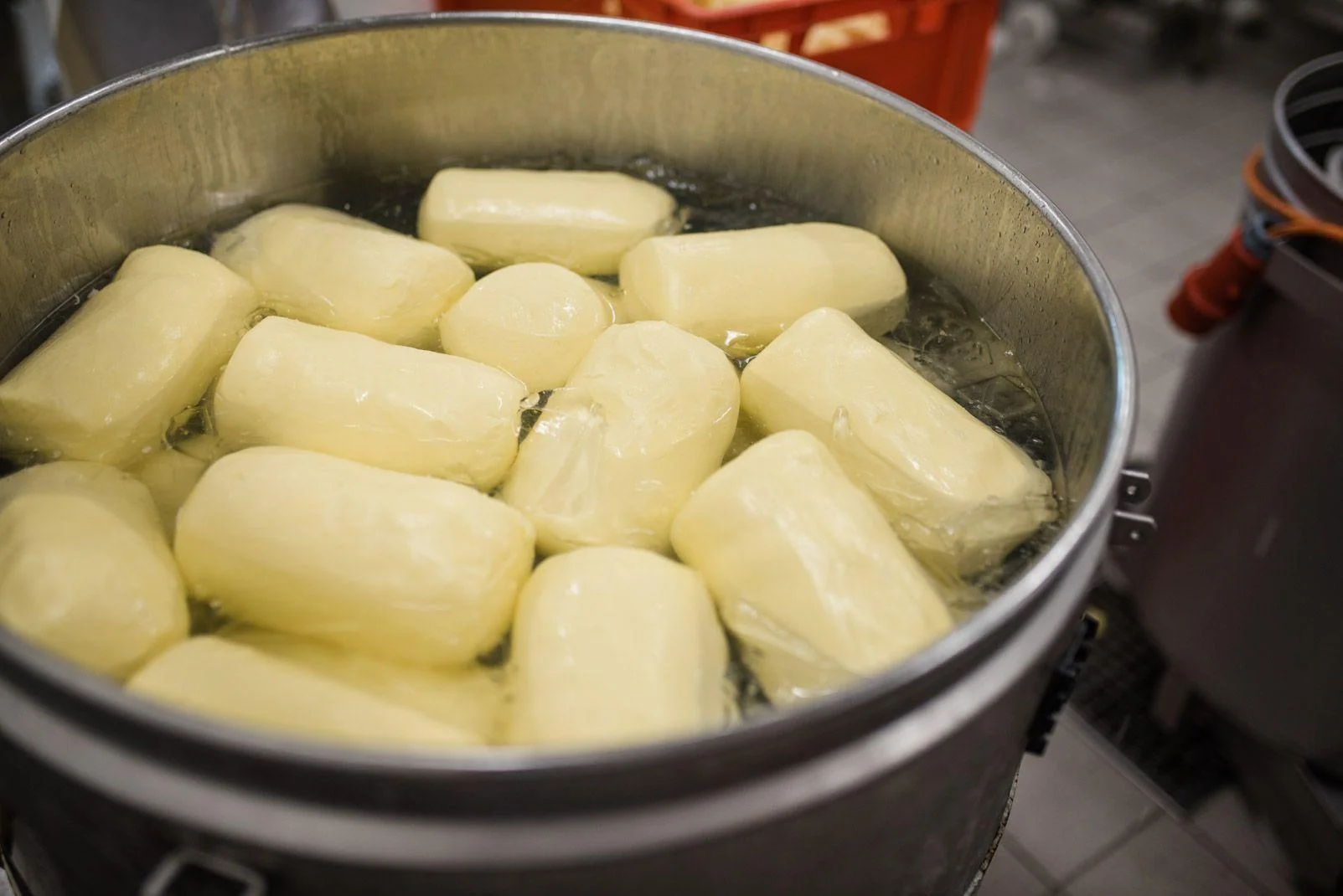
Traditional cheese preparation is shaped by the stages of pressing, brining, and storage.
This is a general description of a documented method, not a claim that every producer follows exactly the same process. Milk type, block size, salt concentration, and additional seasonings can differ between producers.
What Does Nabulsi Cheese Taste Like?
Nabulsi cheese has a milky flavor with pronounced saltiness. Its texture is relatively firm when cold, and it softens and becomes elastic when heated.
The final taste depends on the milk, the amount of salt absorbed during brining, and the way the cheese is stored. Some versions are more strongly salted than others, which is why preparation matters when the cheese is used in a recipe.
How to Desalt Nabulsi Cheese Before Cooking
Because Nabulsi cheese is commonly stored in brine, it may be too salty for a dish if used straight from its container. Soaking it in fresh water helps reduce the salt.
A practical approach is:
- Cut the cheese into slices or cubes so water can reach more of its surface.
- Place it in a bowl and cover it with fresh, cool water.
- Change the water as needed.
- Taste a small piece to check the salt level.
- Drain the cheese before adding it to the recipe.
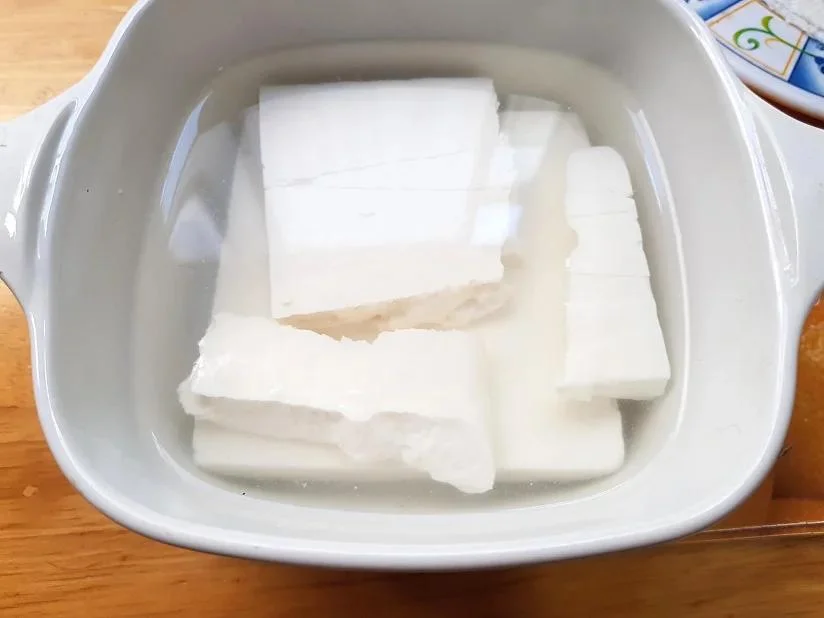
Soaking helps remove some of the salt from brined cheese before cooking.
The time required depends on the size of the pieces and how salty the cheese is. Follow the producer’s storage and handling instructions, and keep the cheese refrigerated during preparation.
How Is Nabulsi Cheese Used in Palestinian Cooking?
Knafeh Nabulsi
The best-known use of Nabulsi cheese is in knafeh Nabulsi (كنافة نابلسية). The cheese is desalted before it is layered with pastry, then baked or cooked until the pastry is golden and the filling is soft. Sugar syrup is added to finish the dessert, often with crushed pistachios.
The cheese’s ability to soften and become elastic when heated is central to the familiar texture of this style of knafeh.
You can read more about the dessert in our guide to Palestinian knafeh and its regional variations, or follow our Palestinian knafeh Nabulsi recipe.
Everyday serving and savory dishes
Nabulsi cheese can also be served with bread, olives, and vegetables. Depending on its salt level, it may need soaking before it is eaten. Its firm texture also makes it suitable for some savory pastries and cooked dishes, although the best preparation depends on the recipe and the particular cheese.
Can You Substitute Nabulsi Cheese?
If Nabulsi cheese is unavailable, some cooks use a combination of cheeses that can provide a soft, stretchy filling and a balanced flavor. Some home recipes use firm mozzarella with ricotta to approximate the texture, although the result is different from Nabulsi cheese.
This is a practical adaptation, not an exact replacement. The result will differ from knafeh made with Nabulsi cheese, particularly in flavor and regional character.
Nabulsi Cheese and Palestinian Food Heritage
Food carries the names of places, the knowledge of producers, and the habits of everyday life. Nabulsi cheese is a clear example: its name connects it to Nablus, while its use in knafeh has introduced it to people far beyond the city.
The cheese is both an ingredient and a part of a living culinary tradition. Learning how it is made, preserved, and prepared gives a fuller picture of the food culture associated with Nablus and Palestine.
For another view of the Palestinian table, explore our Palestinian pantry guide and the wider Food & Recipes collection.
Sources & Further Reading
- M. Ayyash, F. Sherkat and N. Shah, “The effect of substituting NaCl with KCl on Nabulsi cheese,” Journal of Dairy Science (2011).
- “Quality of White-Brined Nabulsi Cheese Made with Different Proportions of Sheep’s and Cows’ Milk,” Current Research in Nutrition and Food Science.
- Sami Tamimi and Tara Wigley, “Knafeh nabulseyeh,” The Guardian (2021).
- Palestinian Knafeh Recipe, Palestine in a Dish.
Production methods and milk choices vary between makers. This guide describes a documented traditional method and does not suggest that every commercial variety is made in exactly the same way.