
Printable tatreez workbook
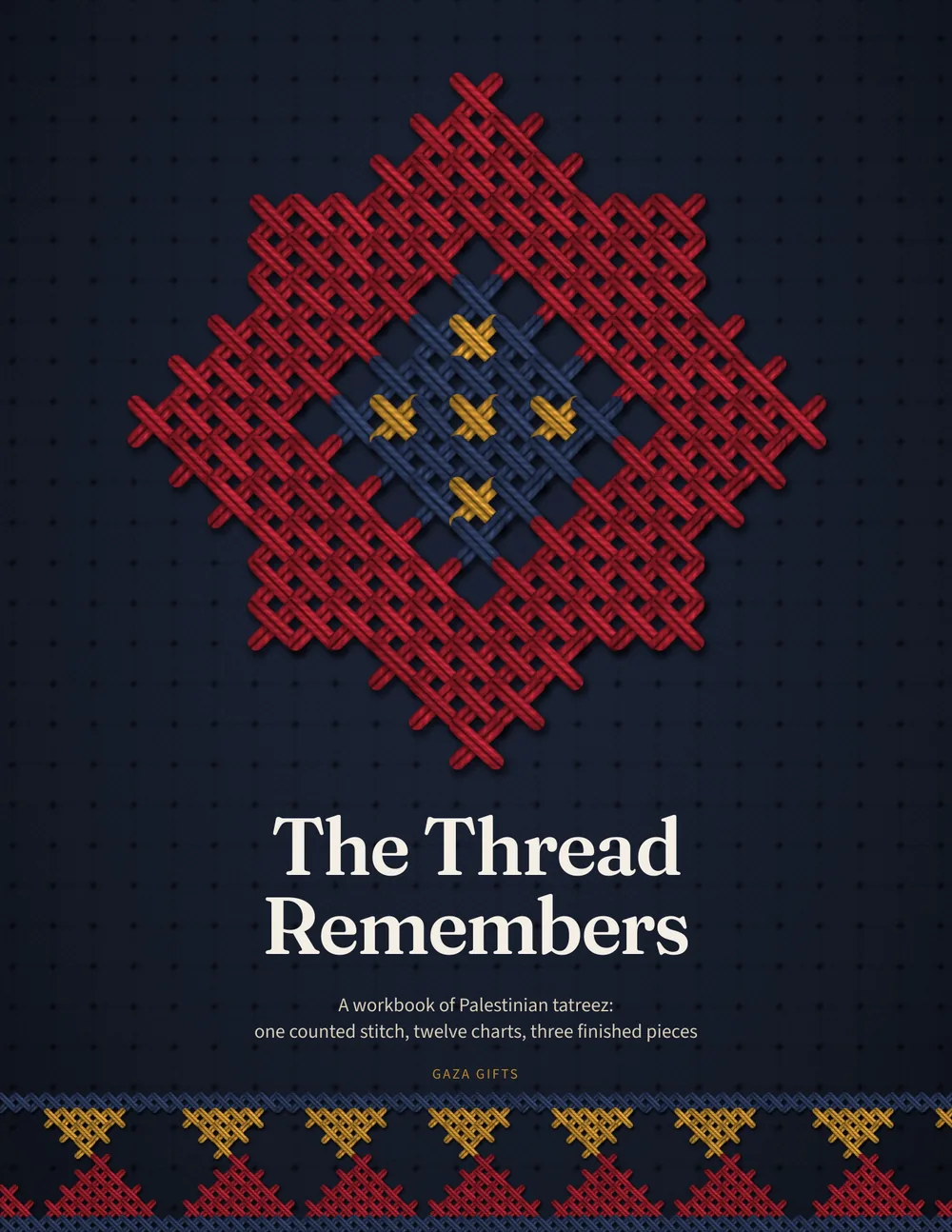
The Thread Remembers
This book is for hands. By the last page you will have stitched three finished pieces, and you will be able to read a counted chart, keep your stitches even and look after what you make.
- pages
- 72pages
- original charts
- 12original charts
- guided projects
- 3guided projects
- US Letter, print at home
- PDFUS Letter, print at home
Sold and delivered by Gumroad. You get the PDF by email right after paying.
Ten pages, exactly as they print.
Scroll sideways. Every image is a real page of the PDF.
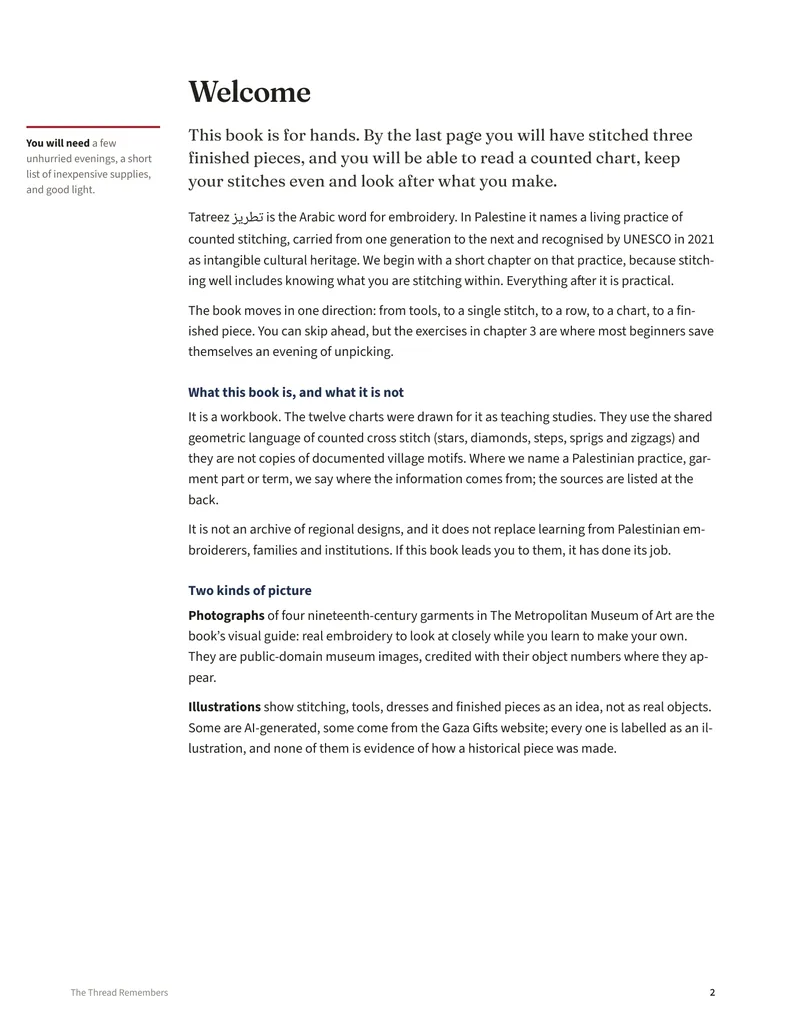
WelcomePage 2 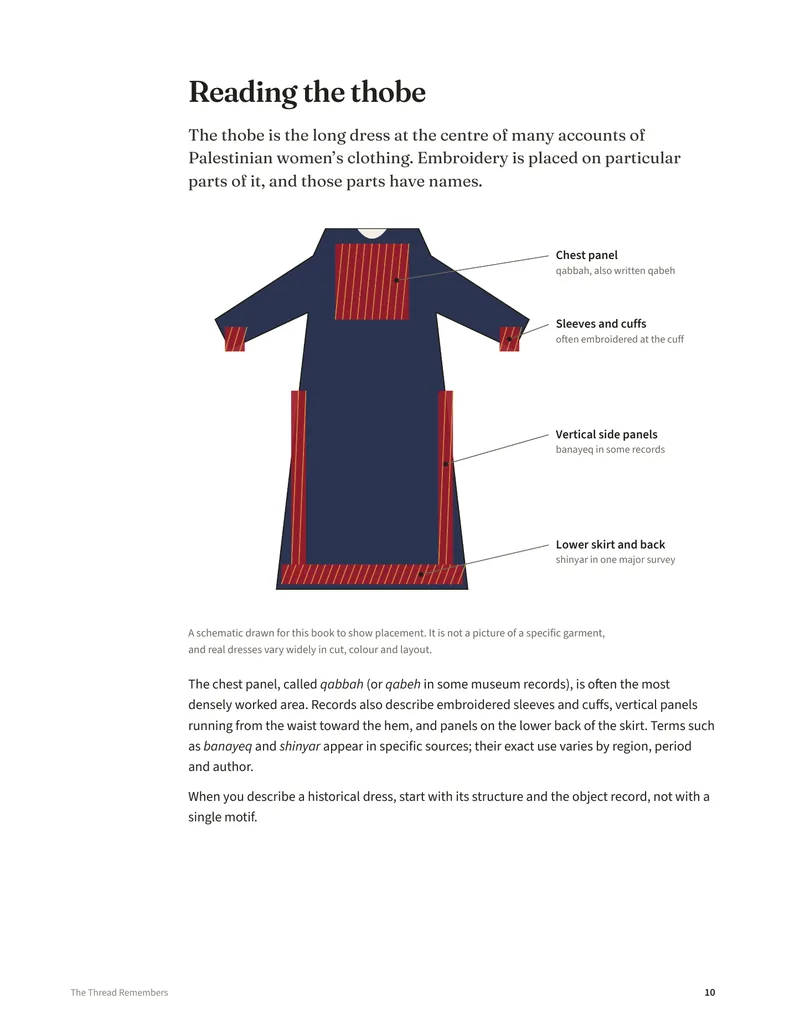
Reading the thobePage 10 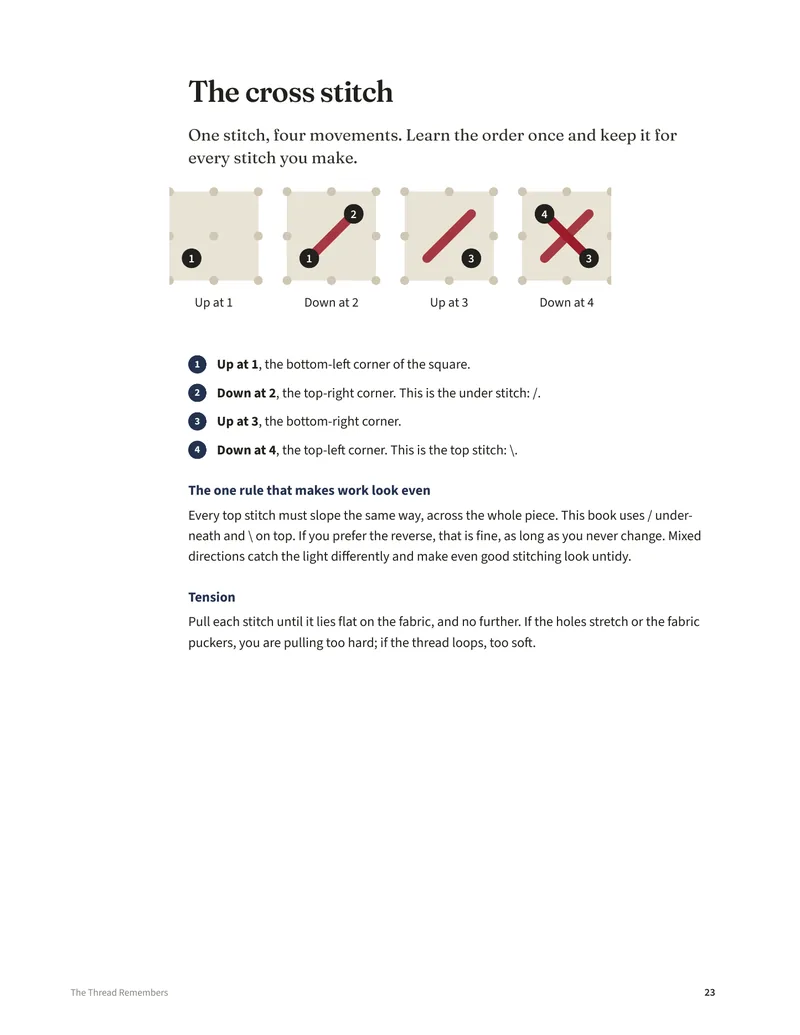
The cross stitchPage 23 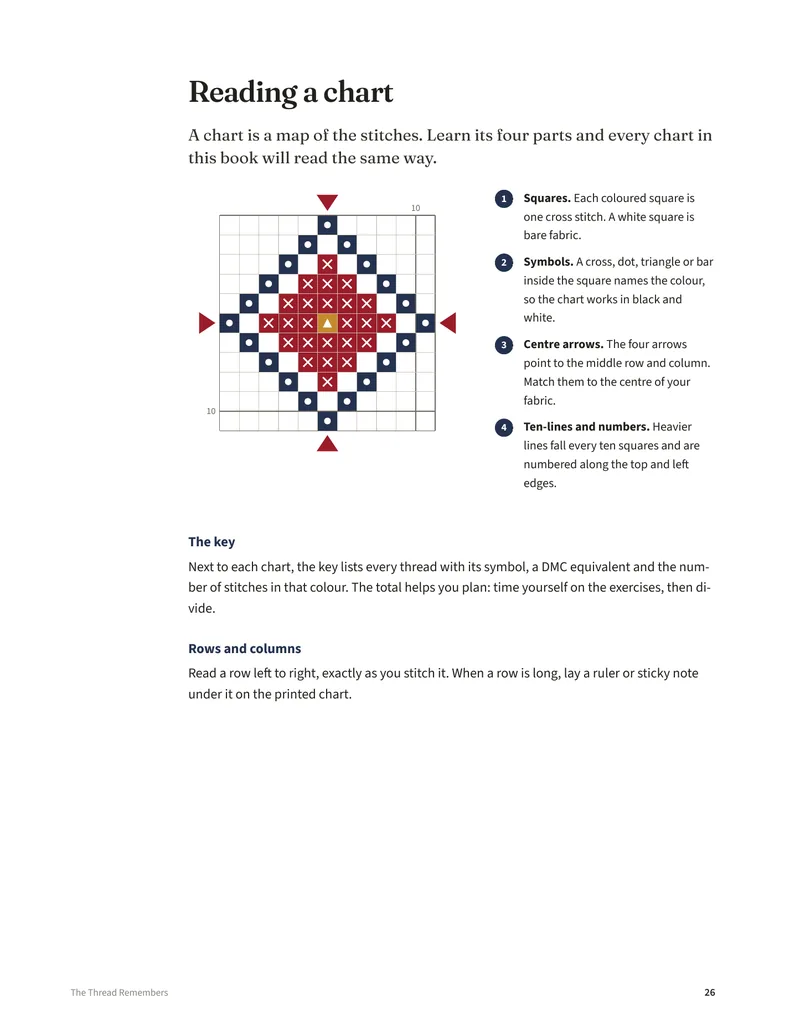
Reading a chartPage 26 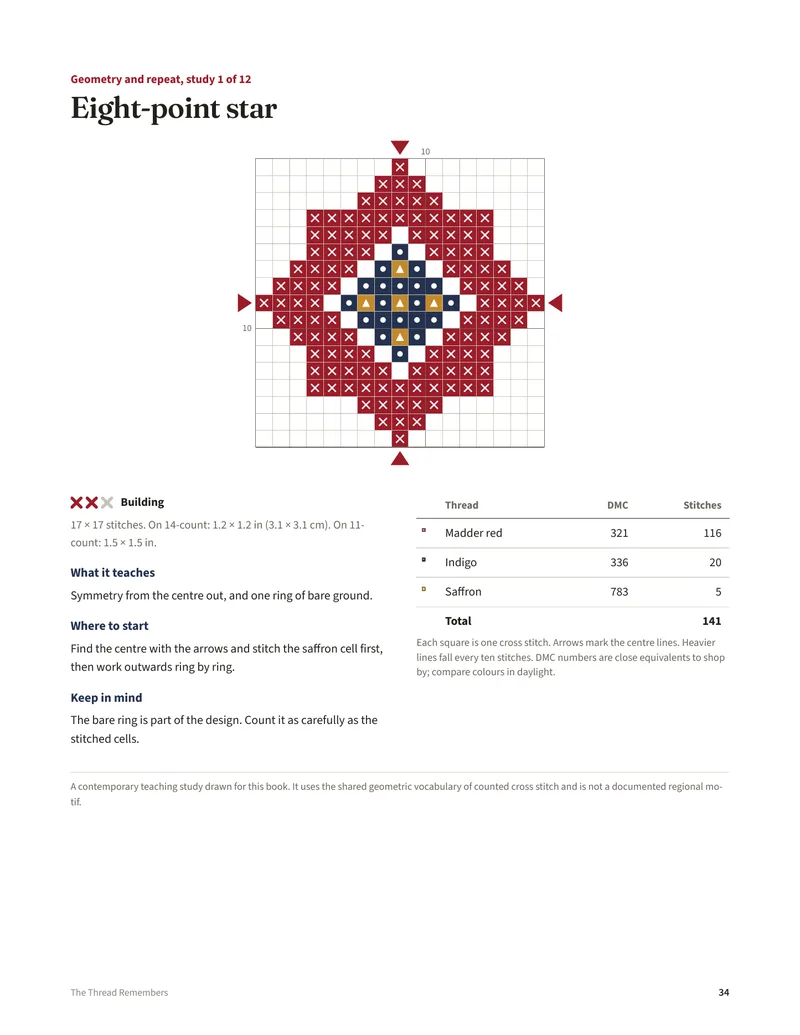
Eight-point starPage 34 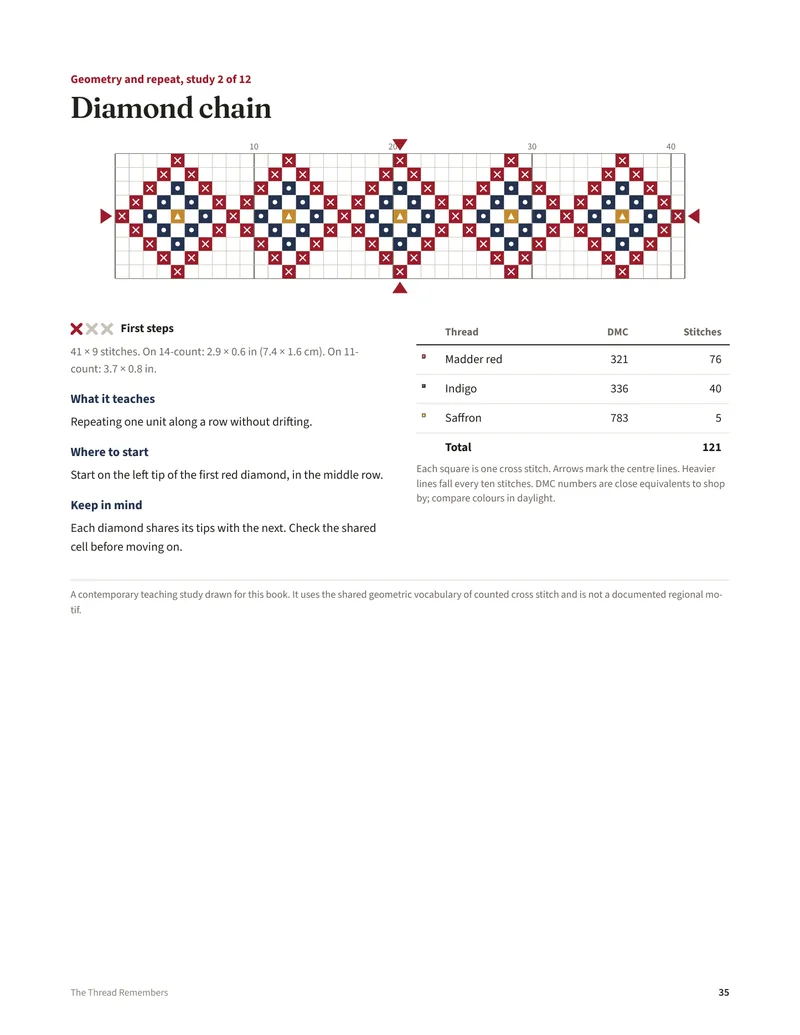
Diamond chainPage 35 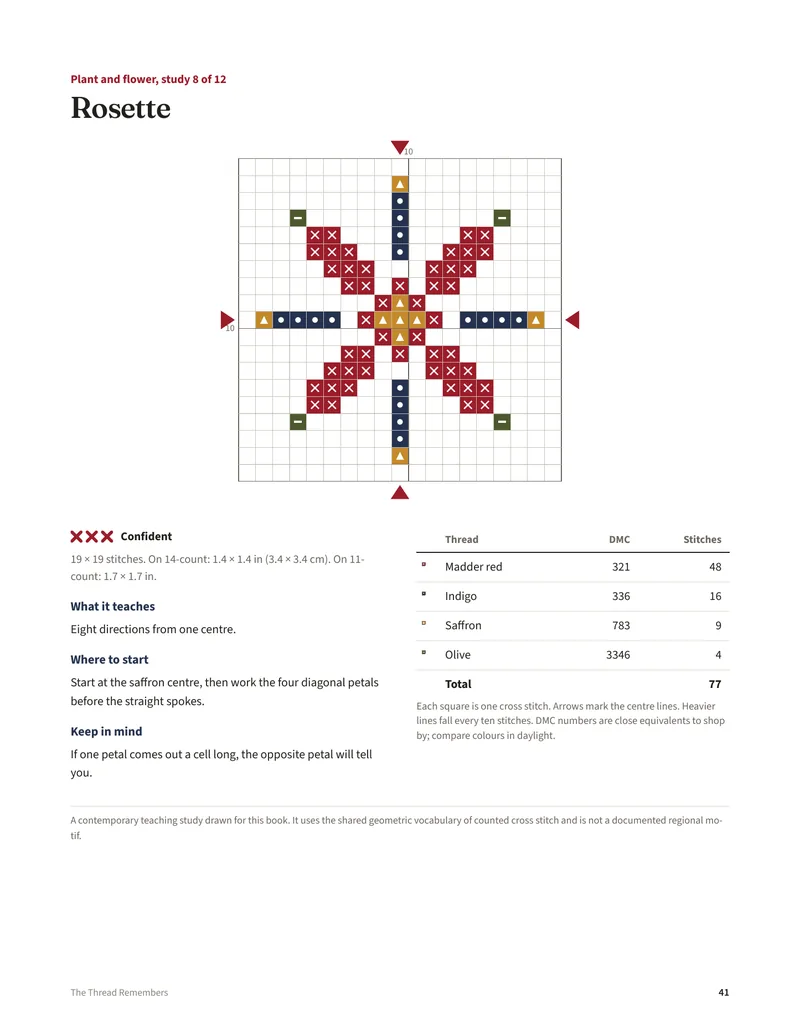
RosettePage 41 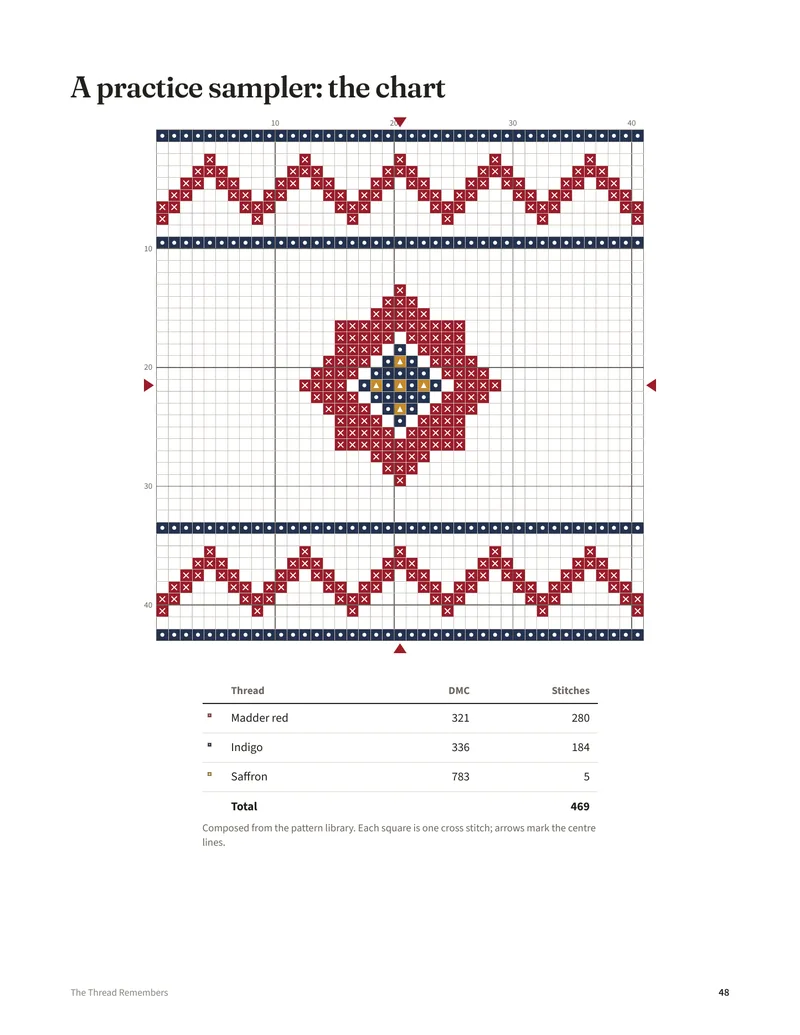
A practice sampler: the chartPage 48 
The record cardPage 59 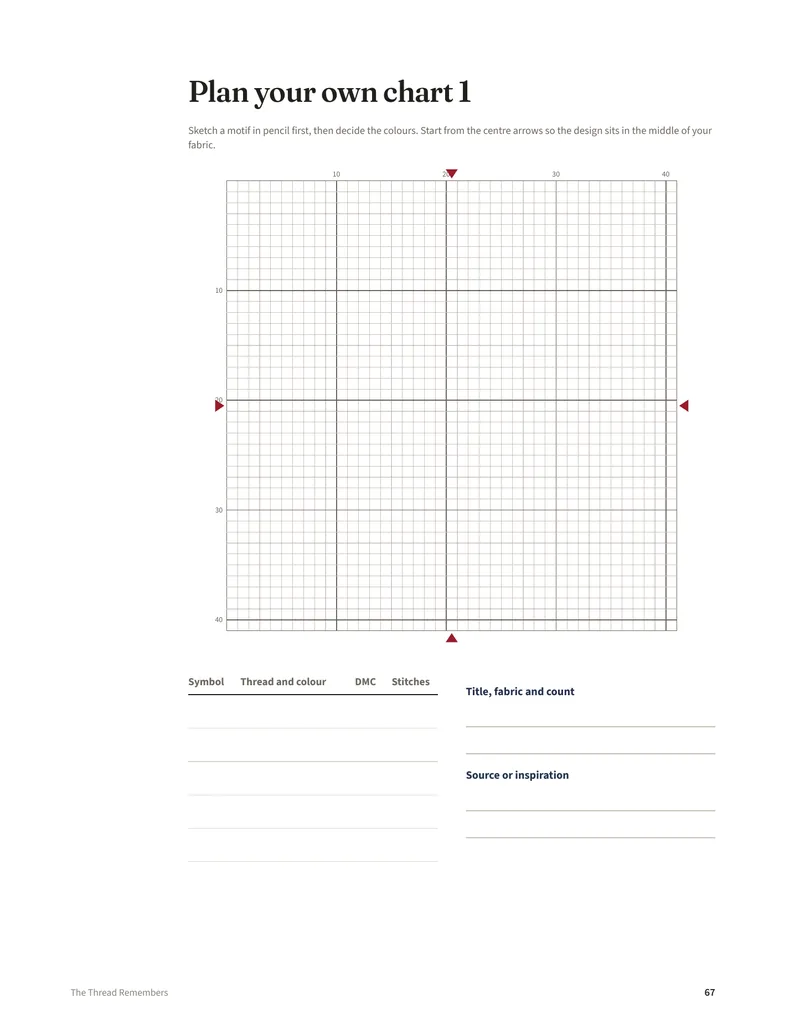
Plan your own chartPage 67
Six chapters, in the order you’ll need them.
The book moves in one direction: from tools, to a single stitch, to a row, to a chart, to a finished piece.
- 1pages 6–14
Understanding Palestinian tatreez
What the practice is, how it carries identity, how to read a thobe, and how to talk about it without inventing a history.
- 2pages 15–20
Tools and materials
Fabric counts, thread and needles, a shopping list, and preparing the cloth.
- 3pages 21–29
Learning the stitch and reading charts
One stitch, one row, one chart, the mistakes worth avoiding, and three practice exercises.
- 4pages 30–45
The pattern library
Twelve original charts in three families, each with thread counts, sizes and where to begin.
- 5pages 46–55
Three guided projects
A framed sampler, a bookmark, and a waste-canvas patch for something you wear or carry.
- 6pages 56–62
Finishing and care
Washing, pressing and fixing mistakes, a record card, a glossary and the sources.
The pattern library
Twelve charts drawn for this book as teaching studies. Start with a level-one chart, then move through the families in any order.
Geometry and repeat
- Eight-point star17 × 17, 141 stitches
- Diamond chain41 × 9, 121 stitches
- Stepped lozenge31 × 15, 117 stitches
- Checker cross19 × 19, 113 stitches
Plant and flower
- Small flower15 × 15, 65 stitches
- Branching stem15 × 29, 75 stitches
- Twin buds21 × 17, 63 stitches
- Rosette19 × 19, 77 stitches
Border
- Zigzag band41 × 10, 164 stitches
- Tooth border41 × 9, 207 stitches
- Diamond and cross border41 × 13, 157 stitches
- Flower vine37 × 12, 67 stitches
Size: stitches wide × high.
Three pieces you will actually finish.
A practice sampler
Two zigzag bands around a central diamond: rows, repeats and symmetry, finished in a frame.
Chart on page 48
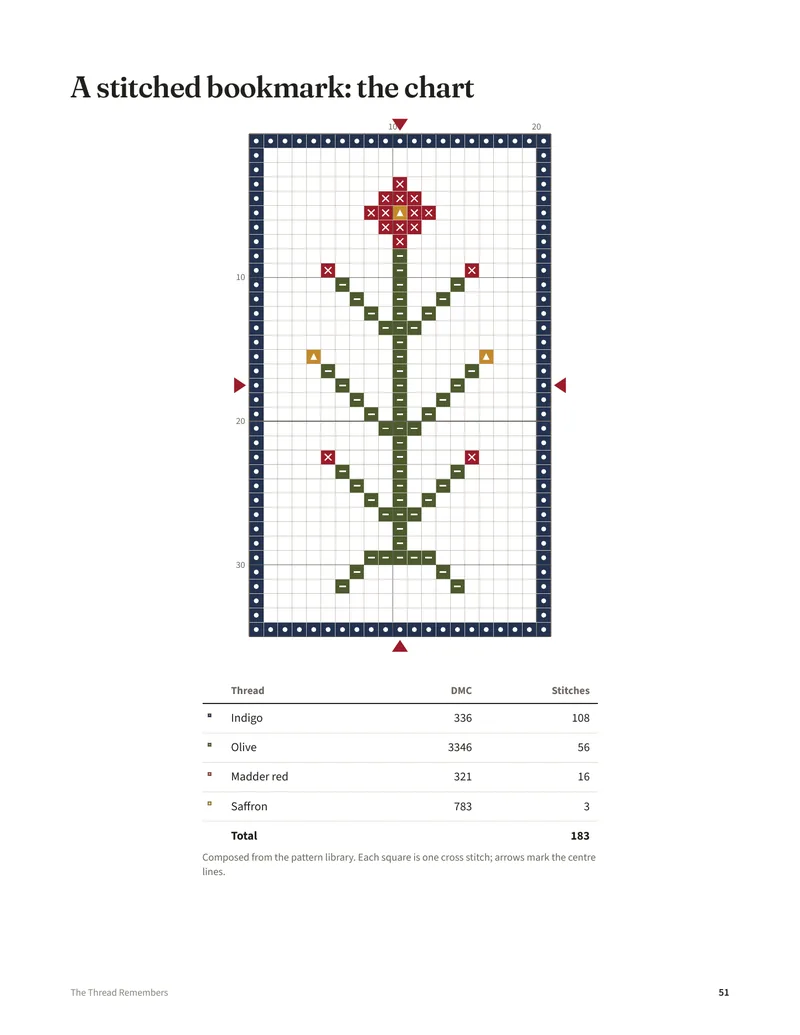
A stitched bookmark
A branching motif on a narrow strip: a small piece used often enough to see every day.
Chart on page 51
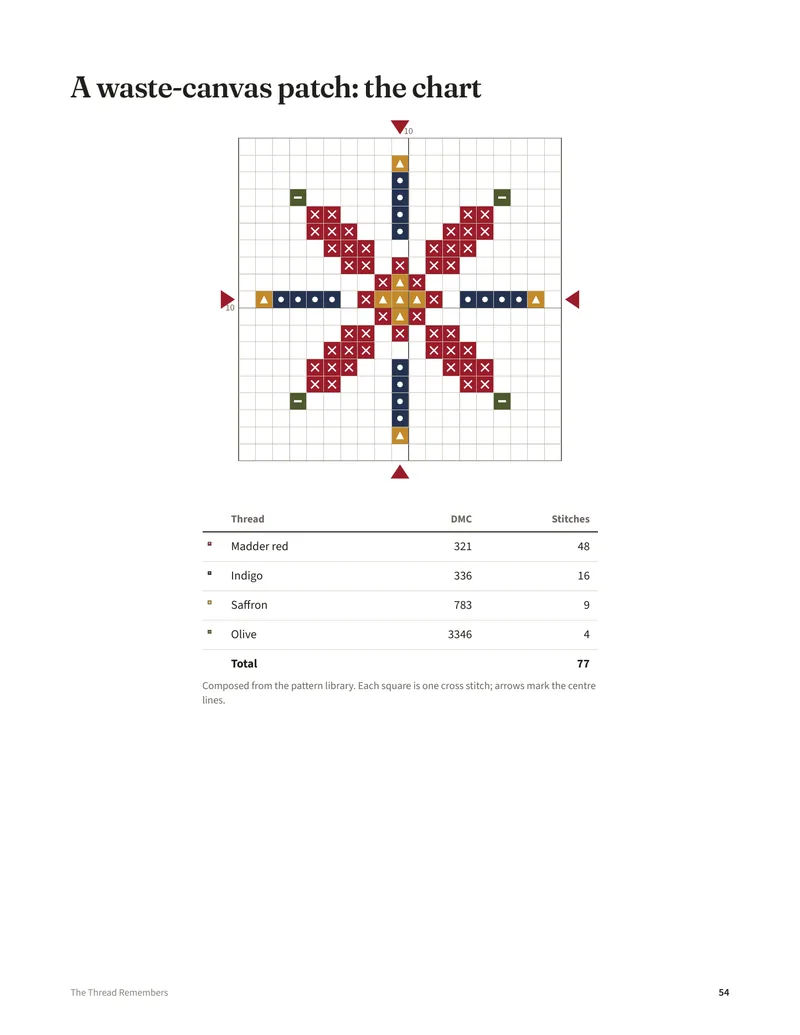
A waste-canvas patch
Counted stitch on a garment or bag with no countable weave, using a grid you pull out afterwards.
Chart on page 54
Pages to print again and again.
The last ten pages are blank tools: four open grids, two chart planners with empty key tables, a border planner and spare record cards. The licence lets you print them as often as you need.
What the charts are, and what they are not.
Each chart is a contemporary teaching study. Stars, diamonds, steps, sprigs and zigzags belong to the shared vocabulary of counted cross stitch. The book gives them no Palestinian motif names or regional attributions, because there is no documented source that would justify one.
- Where the book names a Palestinian practice, garment part or term, it says where the information comes from.
- It is not an archive of regional designs.
- It does not replace learning from Palestinian embroiderers, families and institutions.
Before you buy
Do I need to have stitched before?
No. Chapter 3 starts with one stitch and three short exercises before any chart. Chapter 2 lists the few supplies you need.
What do I need to print it?
A home printer and US Letter or A4 paper. The pages are laid out with margins that survive either size.
Can I sell what I stitch?
You can stitch anything in it and give or keep what you make, and share photos with credit. For workshops, classes or selling finished pieces in quantity, write to info@gazagifts.com.
Can I share the PDF?
No. Please don’t share, resell or upload the PDF or its charts, in whole or in part.
Start with one square.
A few unhurried evenings, a short list of inexpensive supplies, good light and this book.
Buy the PDF · $19