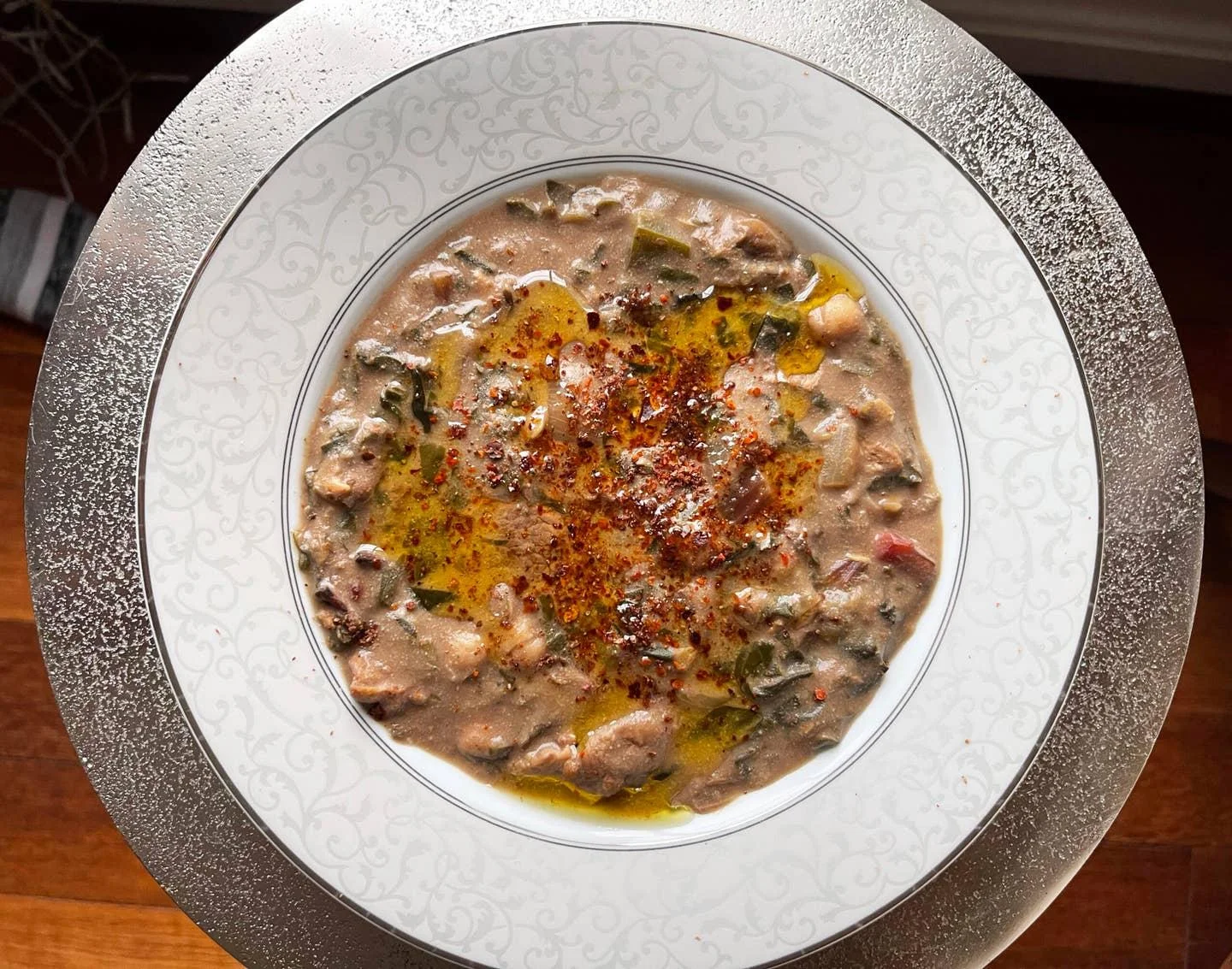
Quick answer: Sumaghiyya (سماقية) is a distinctive stew from Gaza made with meat, chickpeas and chard in a sour sumac infusion thickened with flour and tahini. Garlic, ein jaradeh (عين الجرادة) and chili give it a bold, aromatic finish. The recipe is associated with shared meals and special occasions, although ingredients and serving customs vary between households.
At a glance: 6–10 servings · about 90 minutes (source estimate; varies with the meat) · moderate difficulty.
A dish named for sumac
The name sumaghiyya points to the ingredient that defines the dish: sumac. Rather than sprinkling the spice over a finished plate, cooks steep it in hot water, strain the liquid and use that deep, tart infusion as the base of the stew.
In the pot, the sourness meets the richness of sesame tahini, the body of chickpeas and meat, and the soft green leaves of chard. Garlic, chili and ein jaradeh (عين الجرادة) bring the aromatic heat associated with documented Gazan preparations. There is a source-language discrepancy worth preserving: the English Asif recipe glosses ein jaradeh as dill seeds, while its Arabic page calls them fennel seeds; the Gaza Kitchen archive also refers to dill seed. We retain the local name here and flag the botanical identification for confirmation with a Gazan cook.
The result is neither an ordinary meat stew nor a simple tahini sauce. It is thick, tangy and substantial, often eaten with bread. The exact balance is a matter of household preference: the amount of sumac, the cut of meat, the greens and the strength of the chili can all change.
Sumaghiyya and the Gazan table
The archived Gaza Kitchen recipe describes sumaghiyya as a Gaza City dish traditionally prepared in large quantities for Eid al-Fitr and shared with family, friends and neighbors. Other published accounts connect it with weddings and celebratory gatherings. These are documented contexts, not a rule followed by every family or a claim that the dish is prepared in only one way.
The dish also carries a particular kitchen vocabulary. The term ein jaradeh is retained in Arabic because the sources do not agree on its botanical identification: the English Asif page says dill seeds, its Arabic page says fennel seeds, and the Gaza Kitchen archive says dill seed. This should be confirmed with a Gazan cook before publication. Red tahini, made from sesame seeds roasted more deeply, is used in some Gazan preparations for its darker color and toasted flavor. Where it is unavailable, published recipes also use regular tahini.
What gives the stew its character?
Sumac infusion. Sumac is steeped and strained before it enters the pot. The liquid brings the dish its tartness and color; the amount can be adjusted to taste. This is different from adding dry ground sumac directly: the infusion is the strained liquid, while the powder is the spice before steeping.
Chard and chickpeas. Chard softens into the broth, while chickpeas add texture and substance. Some recipes use the leaves without the thicker stems; household practice may differ.
Ein jaradeh, garlic and chili. These are pounded together to release their aroma before being stirred through the stew. The published recipes use seeds; their botanical identification needs local confirmation before suggesting a substitute.
Tahini and flour. Flour helps thicken the sumac broth, while tahini adds sesame richness. Red tahini gives a deeper roasted note, but regular tahini is a practical alternative.
Gazan sumaghiyya recipe
This home-style adaptation follows the measured ingredient proportions published by Rawhiyah Eltayeb for Asif, while comparing the method and serving notes with the archived Gaza Kitchen recipe. It is not presented as the only authentic version, and it has not yet been independently kitchen-tested by Gazagifts.
- Yield: 6–10 servings
- Total time: about 1½ hours, as listed by the Asif source; actual time depends on the cut of meat and how quickly it becomes tender
- Main ingredients: lamb or veal, chard, chickpeas, sumac, ein jaradeh, garlic, chili, flour and tahini
- Serve with: Arabic bread, parsley and olive oil
Ingredients
- 1 kg lamb shoulder, veal shoulder, or a mixture, cut into small cubes
- 2 medium onions, finely chopped
- ½ cup olive oil
- 2 cups cooked chickpeas, drained
- 3 bunches chard leaves, stems removed and leaves thinly sliced
- 50 g freshly ground sumac
- 3 cups boiling water, for the sumac
- 2 tablespoons ein jaradeh (عين الجرادة; botanical identification to confirm locally)
- 1 head garlic, cloves peeled
- 1 hot green chili, or to taste
- 1 tablespoon ground coriander
- 1 teaspoon ground allspice
- 1 teaspoon ground cumin
- ½ teaspoon black pepper
- 1 teaspoon salt, plus more to taste
- 1 cup plain flour
- ½ cup tahini; use red tahini if available
- Chopped parsley and olive oil, to serve
Method
- Cook the meat. Brown the meat with one chopped onion and the olive oil in a large heavy pot. Add a little water, bring to a simmer and skim any foam. Add enough water to cover, then simmer gently until the meat is tender. Reserve the cooking broth.
- Make the sumac infusion. Place the sumac in a heatproof bowl. Pour over the boiling water, stir and leave to infuse. Strain through a fine sieve or clean cloth, pressing gently to extract the liquid. Discard the solids.
- Soften the chard. Return the pot to the heat. Add the second onion and the sliced chard; stir until the leaves wilt.
- Build the stew. Add the cooked chickpeas, coriander, allspice, cumin and black pepper. Return the meat to the pot.
- Pound the aromatics. In a mortar, pound the ein jaradeh, garlic, chili and salt into a coarse paste. Stir it into the stew.
- Thicken with sumac and flour. Whisk the flour with some cooled reserved broth until smooth. Stir in the strained sumac infusion, then gradually add this mixture to the pot while stirring to prevent lumps.
- Simmer. Cook gently, stirring often, until the stew thickens and the flavors come together. Add reserved broth as needed for a thick but spoonable consistency.
- Finish with tahini. Whisk the tahini with a little warm broth until smooth, then stir it into the pot over low heat. Warm through gently; avoid a hard boil. Taste and adjust the salt, sourness and heat.
- Serve. Finish with chopped parsley and a drizzle of olive oil. Serve with Arabic bread. Some published versions are served hot; the archived Gaza Kitchen recipe rests to room temperature before serving.
Red tahini: what is it?
Red tahini is sesame paste made from seeds roasted more deeply than those used for pale tahini. The longer roast gives the paste a darker color and a fuller, toasted flavor. It is a valued ingredient in some Gazan versions of sumaghiyya, but it may be difficult to find outside the region.
A published Asif recipe uses regular tahini as an alternative. If you make that substitution, expect a lighter color and a gentler sesame flavor; do not treat the two pastes as identical.
Hot, warm or at room temperature?
Published recipes do not describe one universal serving temperature. Rawhiyah Eltayeb’s Asif recipe serves the stew hot. The archived Gaza Kitchen recipe instructs cooks to let it cool and serve it at room temperature. As the stew rests, its flour-and-tahini base firms, so add a little warm broth if you need to loosen leftovers gently.
Common questions
Is sumaghiyya spicy?
It can be, but the heat is adjustable. Green chili is used in some recipes; reduce it or leave it out for a milder pot. The sourness comes mainly from the sumac infusion, not the chili.
Is sumaghiyya the same as a sumac soup?
It is better described as a thick stew. Sumac provides the sour liquid, but meat, chickpeas, chard, flour and tahini give the pot its substantial texture.
What does ein jaradeh refer to?
The sources use the local name ein jaradeh, but their descriptions do not fully agree on the plant: the English Asif page says dill seeds, its Arabic page says fennel seeds, and the Gaza Kitchen archive also refers to dill seed. We have retained the local name and marked the botanical identification for confirmation with a Gazan cook before publication.
Can I use canned chickpeas?
Yes. Drain and rinse them, then add them after the meat has softened. If using dried chickpeas, soak and cook them separately until tender before adding them to the stew.
Can I make it vegetarian?
You can make a meat-free adaptation with vegetable stock and additional chickpeas. Label it as a variation: the published Gaza recipes referenced here use lamb or veal.
Sources and editorial notes
- Rawhiyah Eltayeb, “Sumaqiyya (Gazan Stew)”, Asif. The source provides a measured lamb/veal version and notes the use of red tahini, with regular tahini as an alternative. Its English page glosses ein jaradeh as dill seeds, while its Arabic page labels them fennel seeds; the Gaza Kitchen archive also says dill seed, so local confirmation is still needed.
- The Gaza Kitchen archive, “Sumagiyya”. The archived recipe documents the Gaza City context, a large-batch Eid al-Fitr preparation and room-temperature serving.
- Human Appeal, “Qurbani Sumagiyya recipe from Gaza”, another published preparation.
The quantities above are a home adaptation based primarily on the Asif recipe, not a transcription of one family’s recipe. Household variations are expected. The botanical identification of ein jaradeh needs local confirmation because the Asif English and Arabic pages differ. Gazagifts has not independently kitchen-tested this formula; cooking time, thickness and seasoning should be reviewed before publication.
Read next
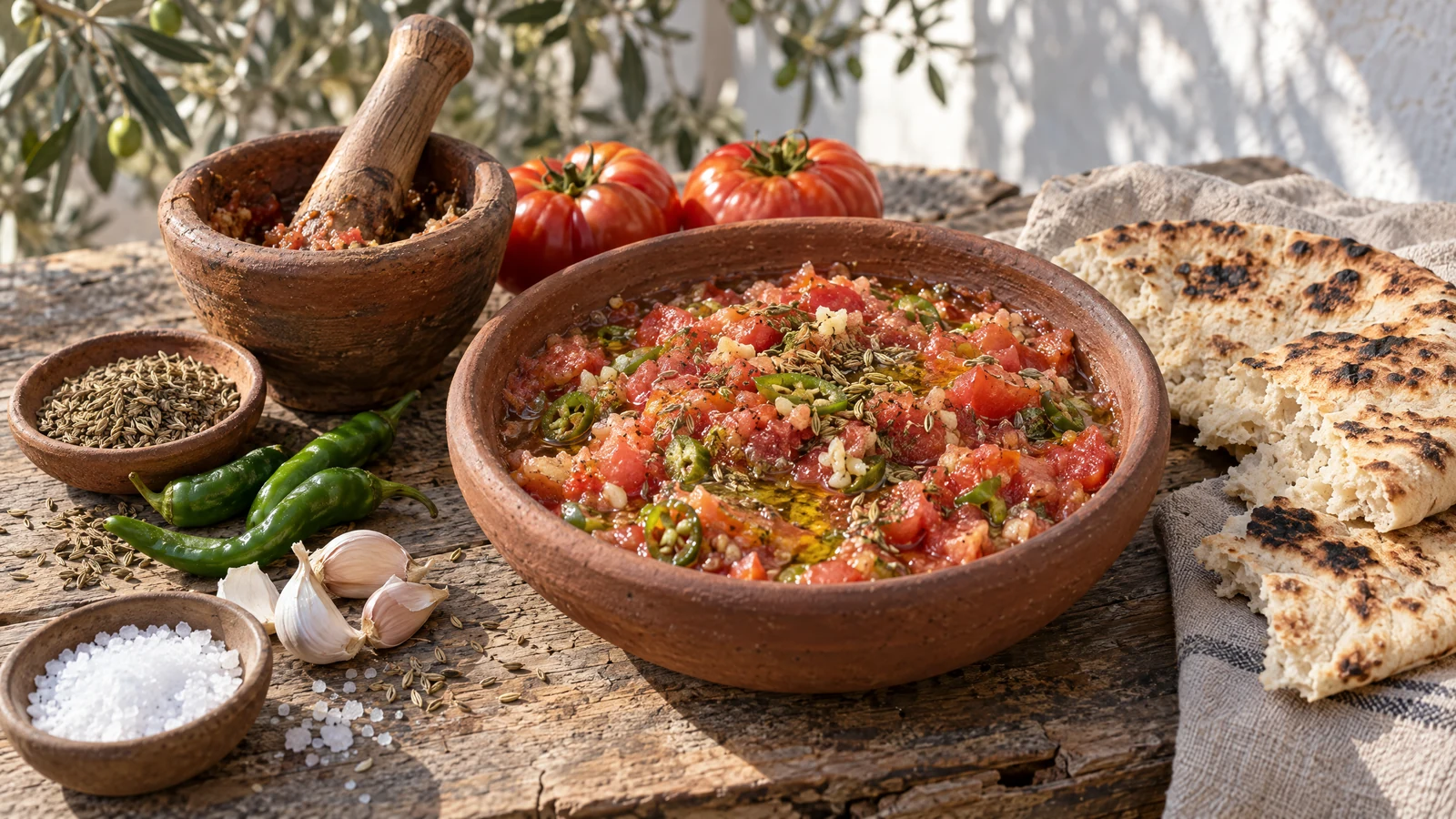
- Make a bright accompaniment with Gazan Dagga: Pounded Tomato Salad with Dill Seed.
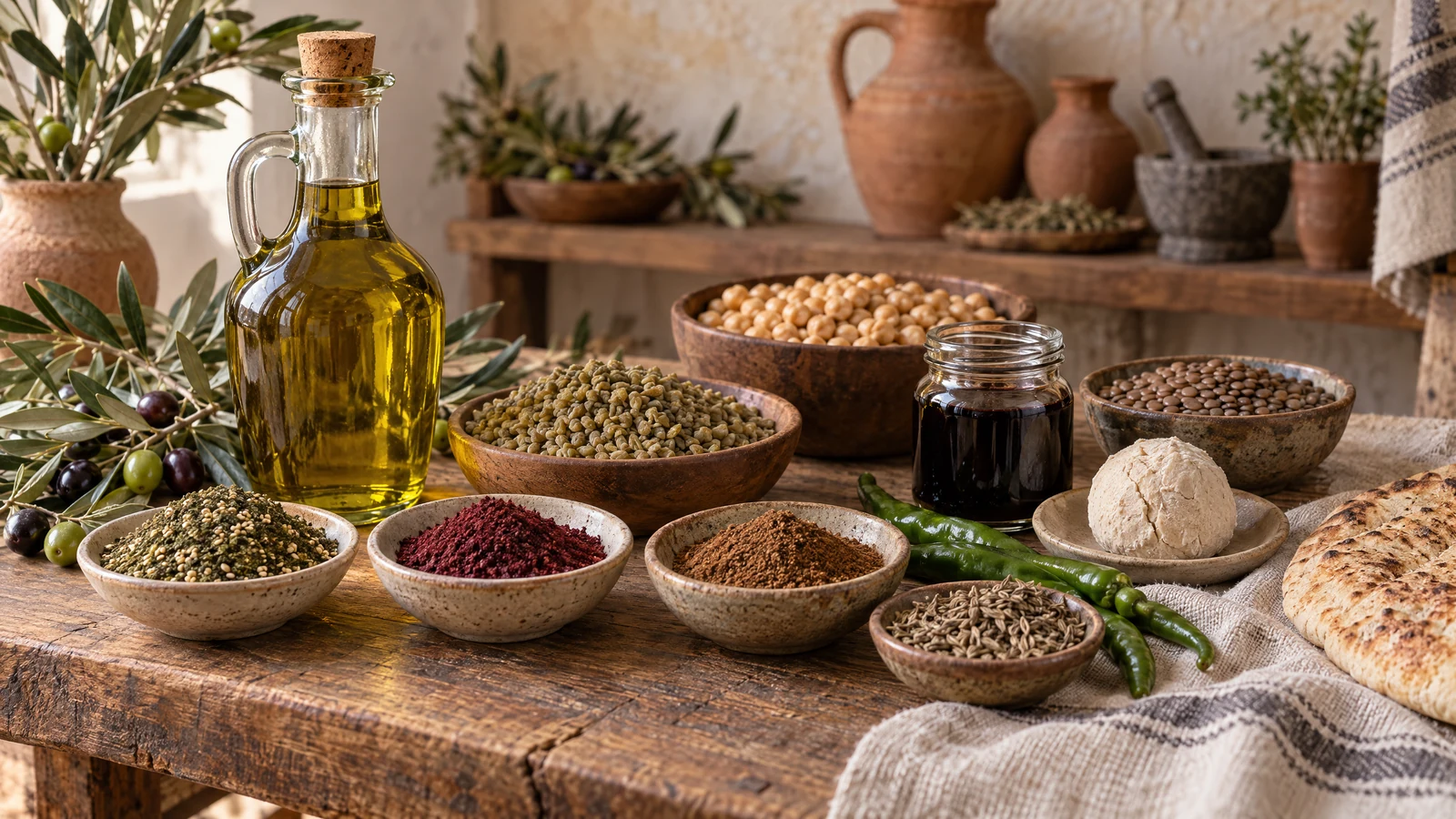
- Explore the ingredients used across Palestinian kitchens in The Palestinian Pantry Guide.
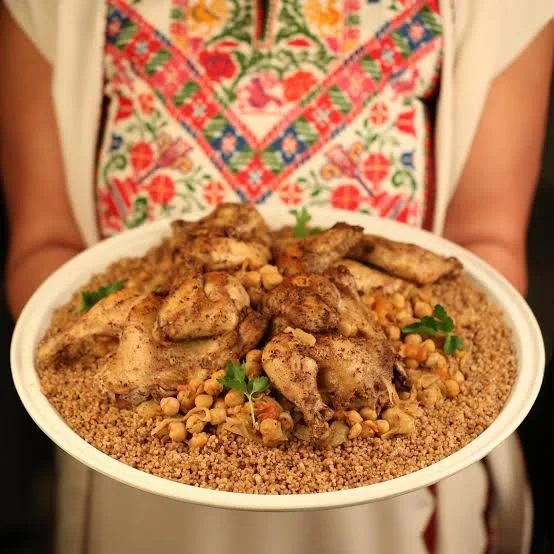
- Discover another shared dish with Palestinian Maftoul.